The Trillion-Dollar Workforce | How Humanoid AI is Igniting a New Manufacturing CapEx Supercycle
The commercial integration of AI-powered humanoid robots in 2026 is igniting a transformative capital expenditure supercycle, systematically reducing industrial operating costs and directing market dominance toward Tier-1 component suppliers and advanced neural network developers.
7
min read
7
min read
Market Catalyst and Investment Inflow
The global humanoid robotics market is officially navigating its commercialization inflection point in early 2026. Major automotive original equipment manufacturers (OEMs) and logistics conglomerates are actively piloting AI-vision-based humanoids on assembly and sorting lines. This transition represents a structural shift in global labor economics. Prominent institutional projections, such as those from Goldman Sachs, forecast this sector will expand to a $38 billion total addressable market by 2035. The primary catalyst for this accelerated growth is the rapid decline in Bill of Materials (BOM) costs. As manufacturing scales, high-spec humanoid unit costs have dropped by over 40%, driving the amortized hourly operating expenses well below traditional human labor rates in developed markets.
Quantitative Market Realities
The infusion of institutional capital into the robotics ecosystem is accelerating, driven by the mandate to resolve severe bottlenecks in physical hardware manufacturing and Artificial General Intelligence (AGI) control software.
Upward Revisions: Goldman Sachs Research dramatically revised its long-term outlook, increasing global shipment estimates for humanoid robots fourfold to 1.4 million units by 2035, effectively upgrading their TAM forecast from $6 billion to $38 billion.
Surging Expenditures: An analysis of manufacturing capital expenditure trends reveals a substantial year-over-year surge in factory automation investments, aggressively led by major big tech and electric vehicle corporations scaling physical AI data collection.
Supply Chain Constrictions: The lead time for critical electromechanical components, particularly high-torque actuators functioning as robot joints and advanced tactile sensors, has extended significantly due to tight global supply capacities and complex precision grinding requirements.
Value Chain and Ecosystem Analysis
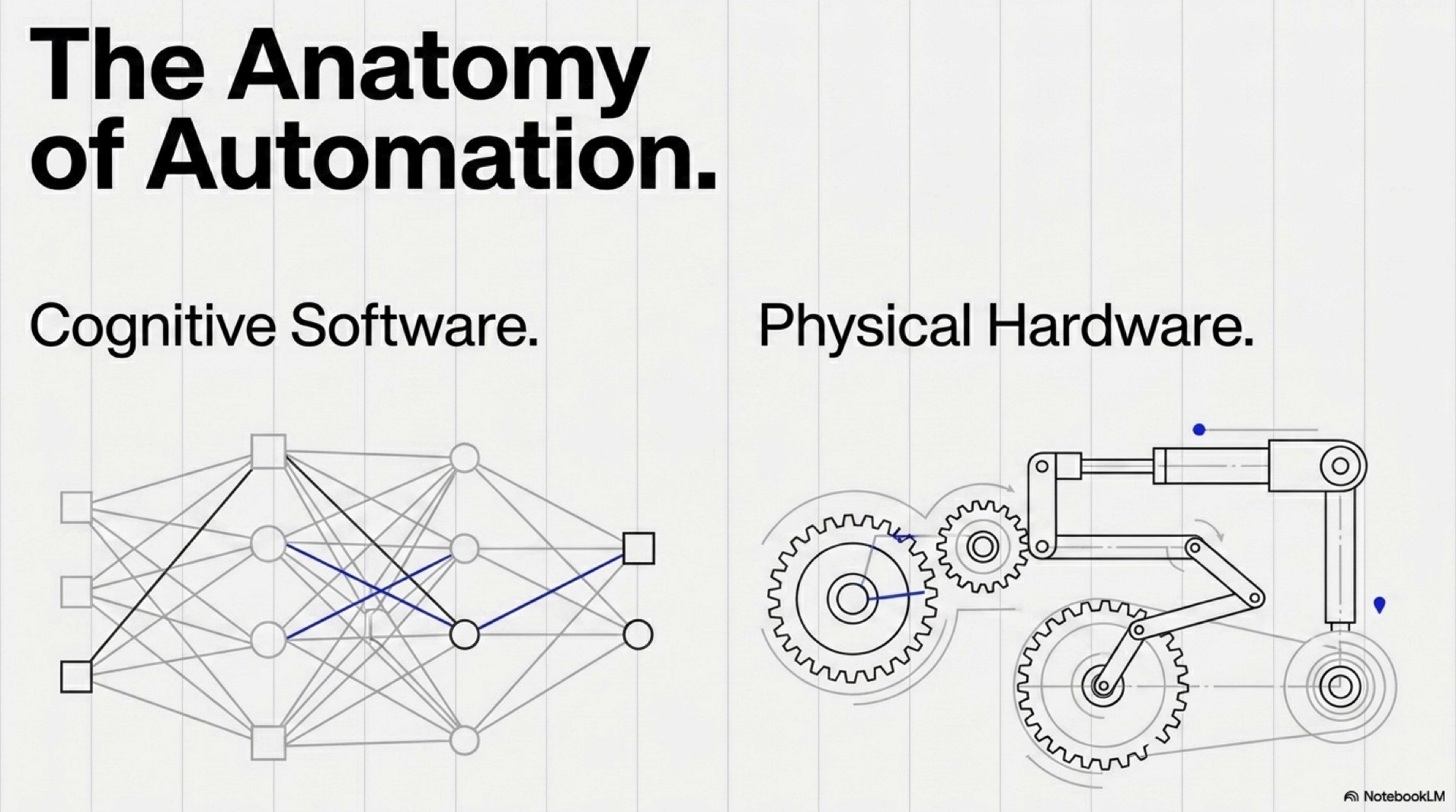
The industrial AI automation ecosystem is bifurcating into two distinct, high-growth pillars: the software "brain" and the hardware "body."
The Software Ecosystem
Valuations are surging for enterprises developing end-to-end neural network control systems grounded in foundational models. The focal point of this growth is Vision-Language-Action (VLA) models. These complex software architectures process egocentric visual data and translate it directly into physical action in real time, serving as the critical cognitive layer for autonomous industrial operations.
The Hardware Ecosystem
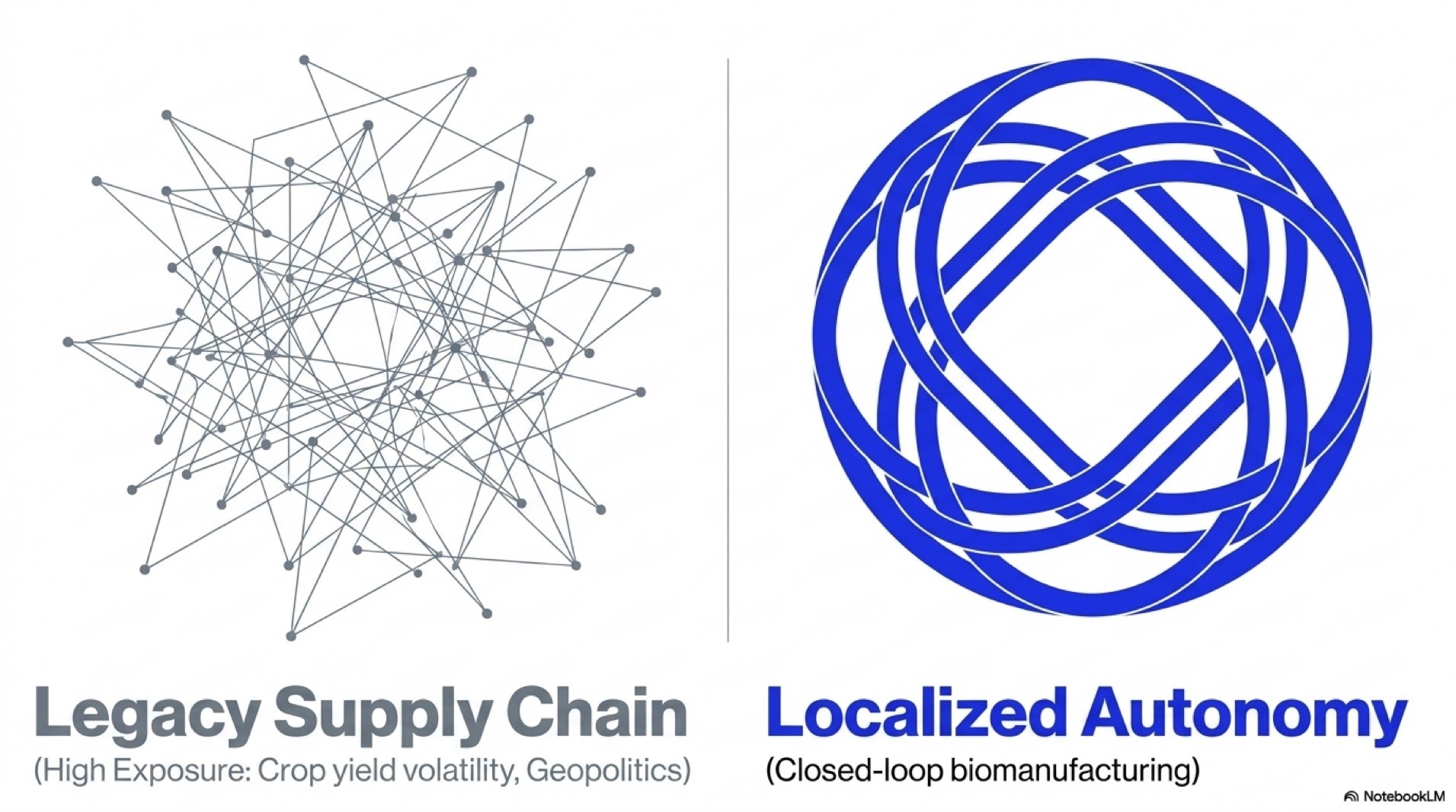
The physical manifestation of these robots requires a highly specialized precision component ecosystem characterized by high torque density and zero-backlash requirements. Historically, this hardware supply chain, specifically for harmonic drives and precision reducers, has been heavily concentrated in Asian markets. However, a significant friend-shoring movement is now accelerating among North American and European vendors seeking to diversify and secure their sovereign supply lines.
Comparative Supply Chain Dynamics
Component Segment
Current Market Challenge
Strategic Capital Response
Cognitive Software (VLA Models)
High computational cost, training data scarcity
Heavy VC funding, Big Tech partnerships
Actuators & Servo Motors
Extended order backlogs, capacity limits
Private equity venture debt for facility scale-up
Precision Reducers
Regional concentration (Asia dominance)
NA/EU friend-shoring, aggressive M&A
Strategic Investment Insights
The humanoid robotics sector has decisively evolved past thematic speculation and is now recognized as a long-term infrastructure asset class capable of generating sustainable free cash flow. Investors are increasingly realizing that final product OEMs will likely face intense price competition and commoditization as the market matures. The ultimate beneficiaries of this automation wave are the Tier-1 component suppliers. Companies holding core intellectual property and proprietary design technologies for the cognitive "brains" and the physical "joints", which account for roughly 50% of the hardware BOM, possess the true monopolistic leverage within the value chain. Over the medium to long term, these critical suppliers are positioned to record the highest Return on Invested Capital (ROIC) across the entire industrial ecosystem.
Disclaimer: This content is for informational and reference purposes only. Always conduct independent research before making financial decisions.