Defending Against Q-Day | The Multibillion-Dollar Enterprise Migration to Post-Quantum Cryptography
The enforcement of finalized NIST post-quantum cryptography standards has catalyzed a massive enterprise technology overhaul, driving global financial institutions and Fortune 500 corporations to allocate billions in capital expenditure to neutralize imminent quantum decryption vulnerabilities.
7
min read
7
min read
Market Catalyst and Enterprise IT Migration
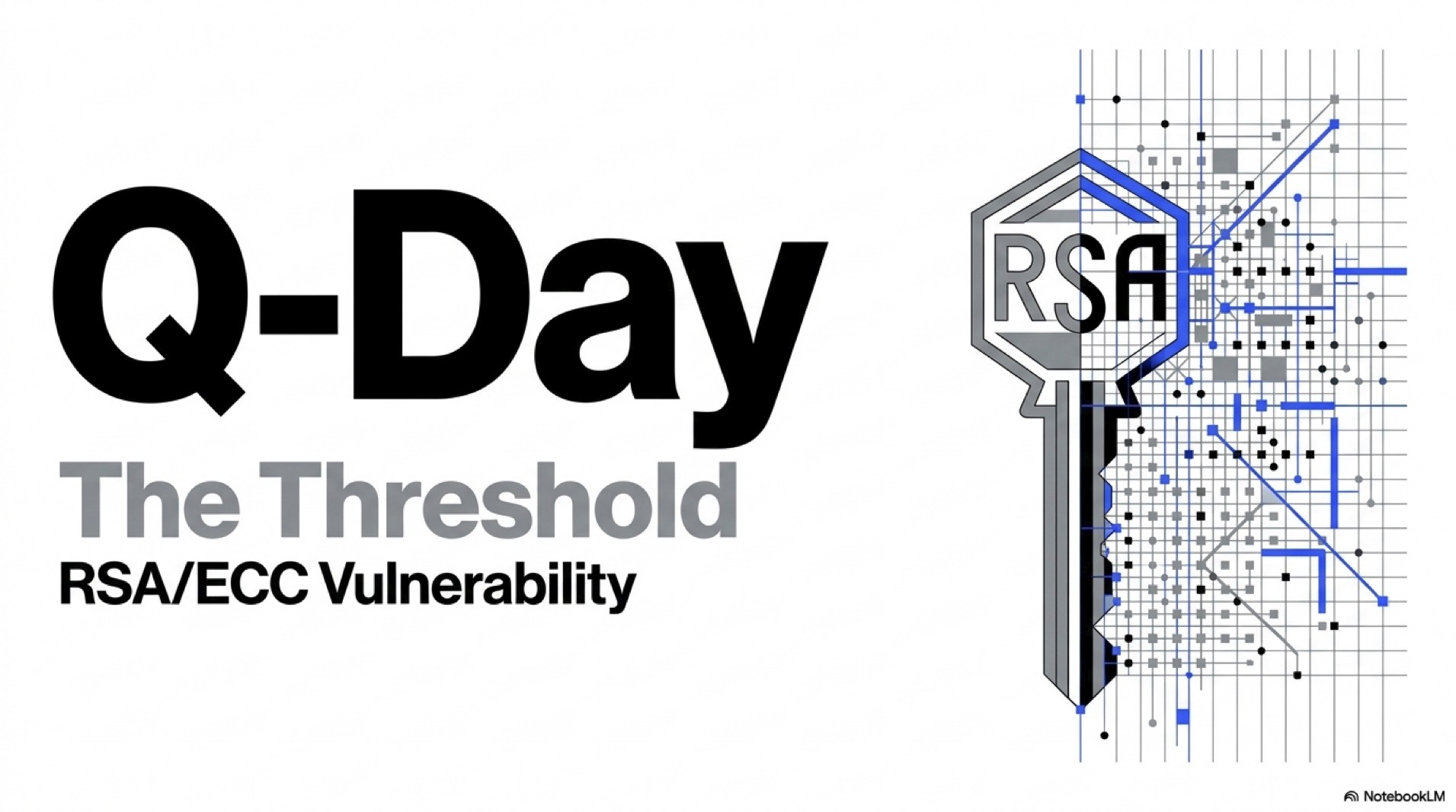
Quantum error correction capabilities are rapidly advancing, bringing the reality of "Q-Day", the hypothetical threshold where quantum computers successfully break RSA and ECC public key encryption, into sharp focus for global security infrastructure. This impending vulnerability has elevated Post-Quantum Cryptography (PQC) migration from a theoretical planning exercise to a mandated, immediate capital expenditure priority within enterprise business-to-business markets. The final publication of NIST standards FIPS 203, FIPS 204, and FIPS 205 officially established the regulatory framework for this transition. The urgency is primarily driven by the escalating frequency of "Store Now, Decrypt Later" (SNDL) attacks, where hostile actors harvest encrypted proprietary data today with the intent to decrypt it once quantum hardware matures. To counter this, proactive defense spending within financial data centers and cloud infrastructures is surging dramatically.
Objective Market Facts & Investment Metrics
Institutional capital and regulatory frameworks are converging to accelerate the deployment of quantum-resistant technologies. The landscape is currently defined by several definitive metrics:
Sector Growth Projections: Industry forecasts indicate the global post-quantum cryptography market will expand at a compound annual growth rate (CAGR) exceeding 37% through the next decade, driven by aggressive corporate compliance mandates and hardware upgrades.
Regulatory Deadlines: Directives such as the US Office of Management and Budget (OMB) Memorandum M-23-02 and National Security Memorandum 10 (NSM-10) explicitly mandate federal agencies to transition completely to quantum-resistant algorithms by 2035, effectively creating a baseline compliance standard for international supply chains.
Systemic Risk Valuation: Leading global economic institutions recognize quantum computing as a systemic cybersecurity threat, with unmitigated quantum attacks on global financial systems carrying a multi-trillion-dollar risk exposure, which continuously accelerates immediate capital inflows.
The Migration Complexity
The transition to quantum-safe environments extends far beyond simple software patches; it represents a fundamental restructuring of global digital security frameworks.
Network Infrastructure Overhaul: Hardware Security Module (HSM) and Public Key Infrastructure (PKI) vendors are entering an unprecedented system upgrade cycle. Legacy hardware incapable of supporting the computationally heavy, lattice-based cryptographic algorithms required by the new NIST standards is being rapidly decommissioned.
The Necessity of Crypto-Agility: The immense complexity of enterprise IT networks dictates that operations cannot pause for system overhauls. Organizations must achieve "crypto-agility", the structural capability to dynamically swap outdated encryption algorithms for quantum-resistant alternatives without disrupting active network traffic. Security software providers that automate this seamless transition are rapidly securing market dominance.
Architectural Comparison: Legacy vs. Quantum-Safe Frameworks
Security Metric
Legacy RSA / ECC Architecture
PQC Integrated Architecture
Primary Threat Vector
Vulnerable to Shor's Algorithm (Q-Day)
Resistant to known quantum algorithms
Data Breach Risk
High exposure to SNDL harvesting
Neutralizes SNDL data utility
System Flexibility
Static encryption standards
High crypto-agility and automated key rotation
Network Integration
Perimeter-based defense models
Native integration with Zero Trust frameworks
Strategic Market Insights
The precise timeline of Q-Day remains strategically irrelevant to current investment flows. The necessity for preemptive defense has transformed the PQC migration into a guaranteed, structural IT capital expenditure cycle that is already in motion. Organizations manufacturing end-user products hold substantially less leverage in this transition. The structural growth premiums will be overwhelmingly captured by pure-play cybersecurity infrastructure firms. Entities providing automated encryption key management software, specialized cloud security gateways, and enterprise networking hardware capable of accelerating PQC workloads are fundamentally positioned to capture maximum profit margins within this multibillion-dollar security paradigm shift.
Disclaimer: This content is for informational and reference purposes only. Always conduct independent research before making financial decisions.