The Invisible Bottleneck | Advanced Water Infrastructure, AI Cooling, and the Semiconductor Supply Chain
The rapid expansion of sub-2nm semiconductor manufacturing and hyperscale AI data centers has elevated advanced water infrastructure to a critical geopolitical asset, propelling the combined industrial wastewater treatment and ultrapure water markets past $31 billion in 2026.
7
min read
7
min read
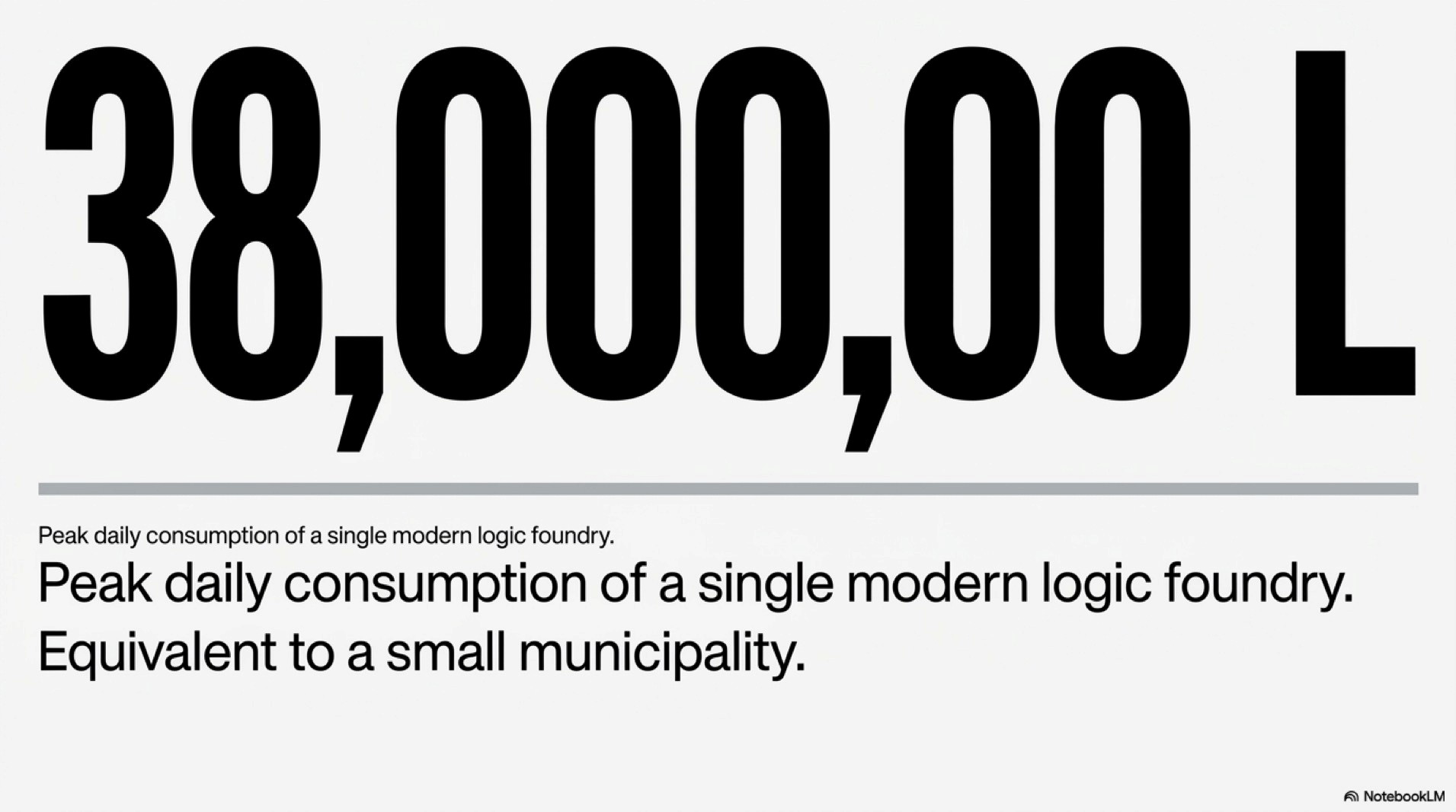
Modern technological supremacy relies heavily on a finite resource. By 2026, the combined global market valuation for industrial wastewater treatment and semiconductor-grade ultrapure water (UPW) systems has exceeded $31 billion, correcting previous industry overestimates of the $120 billion threshold. The primary driver for this growth is the immense resource intensity of next-generation semiconductor fabrication. A single modern logic foundry consumes between 20 to 38 million liters of water daily, rivaling the demand of a small municipality. Consequently, secure water procurement directly impacts the marginal cost of advanced chip production. Tightening environmental regulations simultaneously mandate the adoption of Zero Liquid Discharge (ZLD) systems. Specialized equipment manufacturers engineering these closed-loop facilities currently maintain extensive multi-year order backlogs.
Regulatory Pressures and Foundational Facts
Global resource quotas fundamentally alter the operational blueprints of major hardware manufacturers. State legislation across the American Southwest, specifically within fab-dense regions like Arizona, alongside European industrial hubs, imposes rigorous consumption limits. Leading foundries aggressively revised their 2026 operational frameworks to ensure business continuity amidst the escalating scarcity of cooling resources for data centers.
Metric
2026 Market Reality
Foundry ESG Targets
TSMC, Intel, and Samsung Electronics enforce process water reuse rates exceeding 90%.
Financial Health
Core water treatment equipment firms generate robust Free Cash Flow (FCF) margins, supported by long-term service contracts.
Key Technologies
Advanced facilities rely heavily on Reverse Osmosis (RO) membranes, Ion-exchange resins, and Ultraviolet (UV) oxidation.
The Oligopoly of Ultra Pure Water
Executing sub-2nm node manufacturing processors necessitates water purified to the parts-per-trillion level. The UPW value chain operates as a strict oligopoly. Immense technical barriers restrict top-tier supply primarily to a few specialized advanced materials and chemical engineering corporations headquartered in Japan, such as Kurita Water Industries, and North America. As the necessity for zero-defect silicon wafers scales, these niche providers wield substantial pricing power over the broader semiconductor supply chain.
Hyperscale AI and the Liquid Cooling Transition
Generative artificial intelligence processing has exhausted the thermal limits of traditional air cooling methods. Data center operators are executing a rapid architectural pivot toward direct-to-chip liquid cooling systems. This transition triggers secondary infrastructure hurdles. Mitigating massive evaporative losses and adhering to regional environmental constraints requires facility operators to deploy internal purification networks and closed-loop wastewater circulation. The ZLD water treatment sector demonstrates accelerated growth because hyperscale operators cannot tolerate compute downtime resulting from localized droughts or municipal utility rationing.
Private Equity and Infrastructure Financing
Deploying industrial-scale recycling facilities demands massive initial capital expenditures. This capital intensity catalyzes a structural pivot toward infrastructure privatization. Niche private equity firms increasingly acquire treatment assets, establishing long-term Operations and Maintenance (O&M) agreements. This financial architecture secures predictable yields for institutional investors while offloading facility risk from technology operators, enabling foundries to allocate capital strictly toward hardware fabrication.
Macro Insight: Water Tech as a Systemic Asset
Resource scarcity transcends localized environmental policy to become a macroeconomic systemic risk dictating technological hegemony. Corporations engineering high-filtration membrane materials and advanced fluid management solutions now command a level of pricing power previously confined to consumer staples. By securing the operational baseline for both global silicon manufacturing and AI infrastructure, the water technology sector establishes itself as an indispensable pillar of the digital economy.
Disclaimer: This content is for informational and reference purposes only. Always conduct independent research before making financial decisions.