Scaling Synthetic Biology | How Precision Fermentation Restructures Global Supply Chains
The rapid transition of the precision fermentation sector from experimental research to commercial biomanufacturing scale-up fundamentally reorganizes global supply chains by directing massive synthetic biology investments toward physical hardware infrastructure and contract manufacturing facilities.
7
min read
7
min read
Market Catalyst and Investment Inflow
The precision fermentation sector has officially crossed the threshold from experimental research to commercial viability, demonstrating an annual growth rate exceeding 44% in 2026. Accelerated by extreme weather events disrupting traditional agricultural supply chains and the impending enforcement of cross-border carbon pricing, institutional capital is aggressively financing industrial scale-up operations. Validated life cycle assessments indicate these biomanufacturing processes reduce freshwater consumption by up to 99% and land requirements by over 95% compared to conventional livestock agriculture. These verified environmental metrics firmly establish the sector as a foundational asset within ESG-focused portfolios. The immediate consequence of this rapid commercialization is a critical bottleneck in physical hardware availability. Manufacturers of industrial bioreactors and precision filtration systems face record order backlogs as global demand for scale-up infrastructure dramatically outpaces existing production capacities.
Market Facts & Regulatory Shifts
The landscape of agtech and climate finance is undergoing a structural realignment toward hard assets. Key market indicators currently include:
Capital Allocation: A substantial segment of venture capital and private equity deployments within the climate technology sector has explicitly pivoted toward financing physical biomanufacturing facilities and large-scale bioreactor hardware.
Regulatory Acceleration: Major global regulatory bodies, including the US FDA and the European Food Safety Authority (EFSA), are progressively streamlining Generally Recognized As Safe (GRAS) and Novel Food designations for precision fermentation ingredients.
Material Price Parity: Engineered biopolymers designed to replace petrochemical plastics are steadily advancing toward price parity with fossil fuel derivatives, accelerated by enhanced microbial strain yields and economies of scale.
Comparative Analysis: Traditional Production vs. Precision Fermentation
Metric
Traditional Agriculture / Petrochemicals
Precision Fermentation Alternatives
Land Usage
High (Vast acreage required)
>95% Reduction
Water Consumption
High (Intensive irrigation/livestock)
>90% Reduction
Production Cycle
Months to Years
Days to Weeks
Supply Chain Risk
High (Weather, Geopolitics)
Low (Localized bioreactors)
Structural Analysis of Capital and Supply Chains
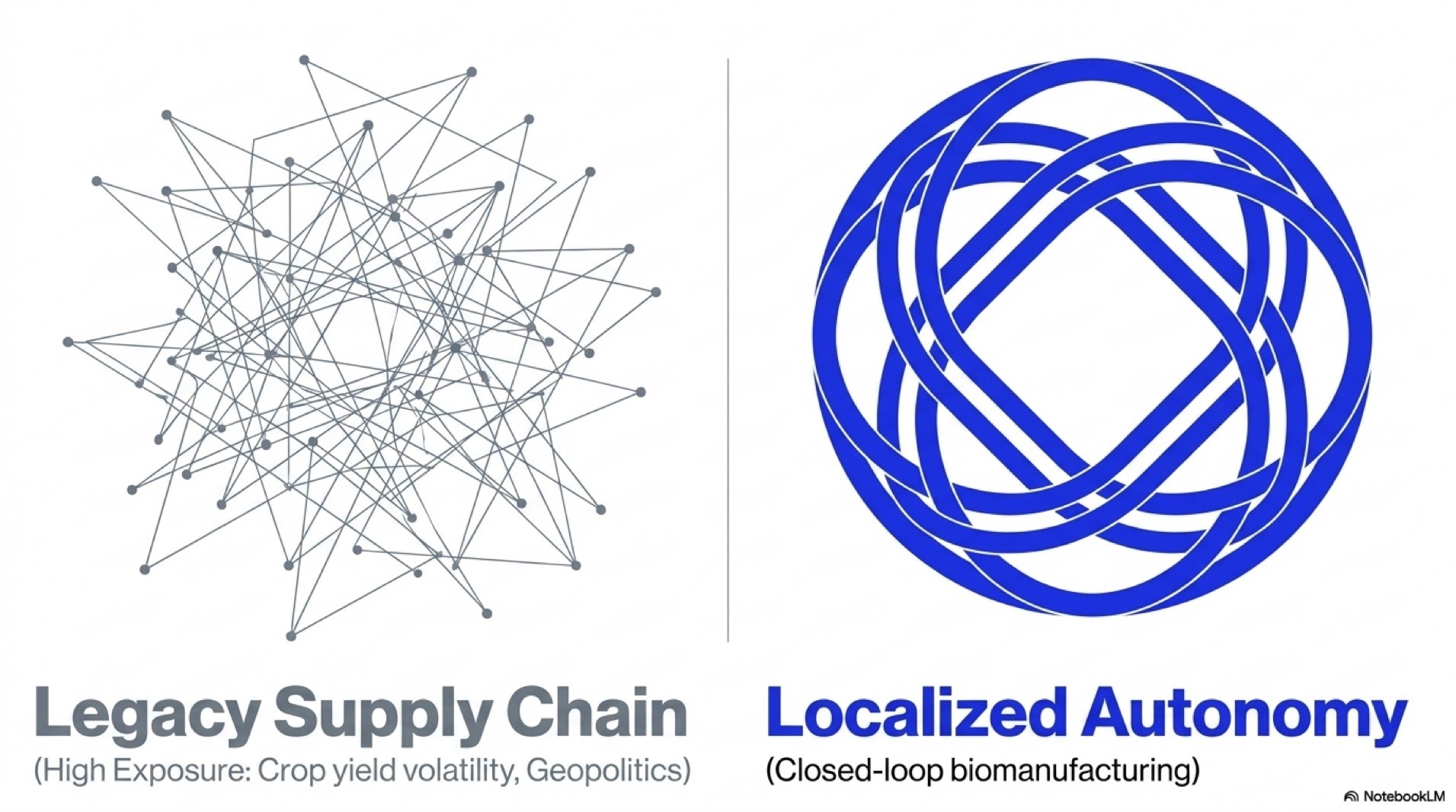
The fundamental nature of synthetic biology investment frameworks has systematically evolved. In preceding funding cycles, capital was overwhelmingly concentrated on software modeling and biological strain engineering. Capital expenditure now targets heavy hardware and high-capacity fermentation tanks designed to optimize unit economics. This strategic shift facilitates massive horizontal technology expansion. Biological processing methodologies, previously restricted to high-margin pharmaceutical manufacturing, are actively transitioning into bulk commodity production. The synthesis of alternative dairy proteins, specialty cosmetic active ingredients, and industrial biochemicals is migrating rapidly to standardized fermentation platforms. Concurrently, traditional food and beverage conglomerates face escalating exposure to crop yield volatility and geopolitical supply disruptions. To secure supply chain autonomy and hedge against unpredictable raw material costs, legacy corporations are accelerating mergers, acquisitions, and strategic joint ventures with precision fermentation developers at an unprecedented velocity.
Strategic Insights: The New Value Chain
Commercial dominance within the synthetic biology landscape no longer relies exclusively on designing novel microbial strains. The critical competitive moat has definitively transitioned to biomanufacturing scale-up capabilities and precise downstream yield management. Within this newly formed framework, business-to-consumer end-product brands hold progressively less market leverage. Monopolistic pricing power resides predominantly with business-to-business infrastructure providers. Technology firms developing AI-driven process control software for fermentation automation, alongside Contract Development and Manufacturing Organizations (CDMOs) engineering continuous fermentation hardware, are structurally positioned to capture maximum profit margins and exert supreme influence across the modern bio-industrial value chain.
Disclaimer: This content is for informational and reference purposes only. Always conduct independent research before making financial decisions.