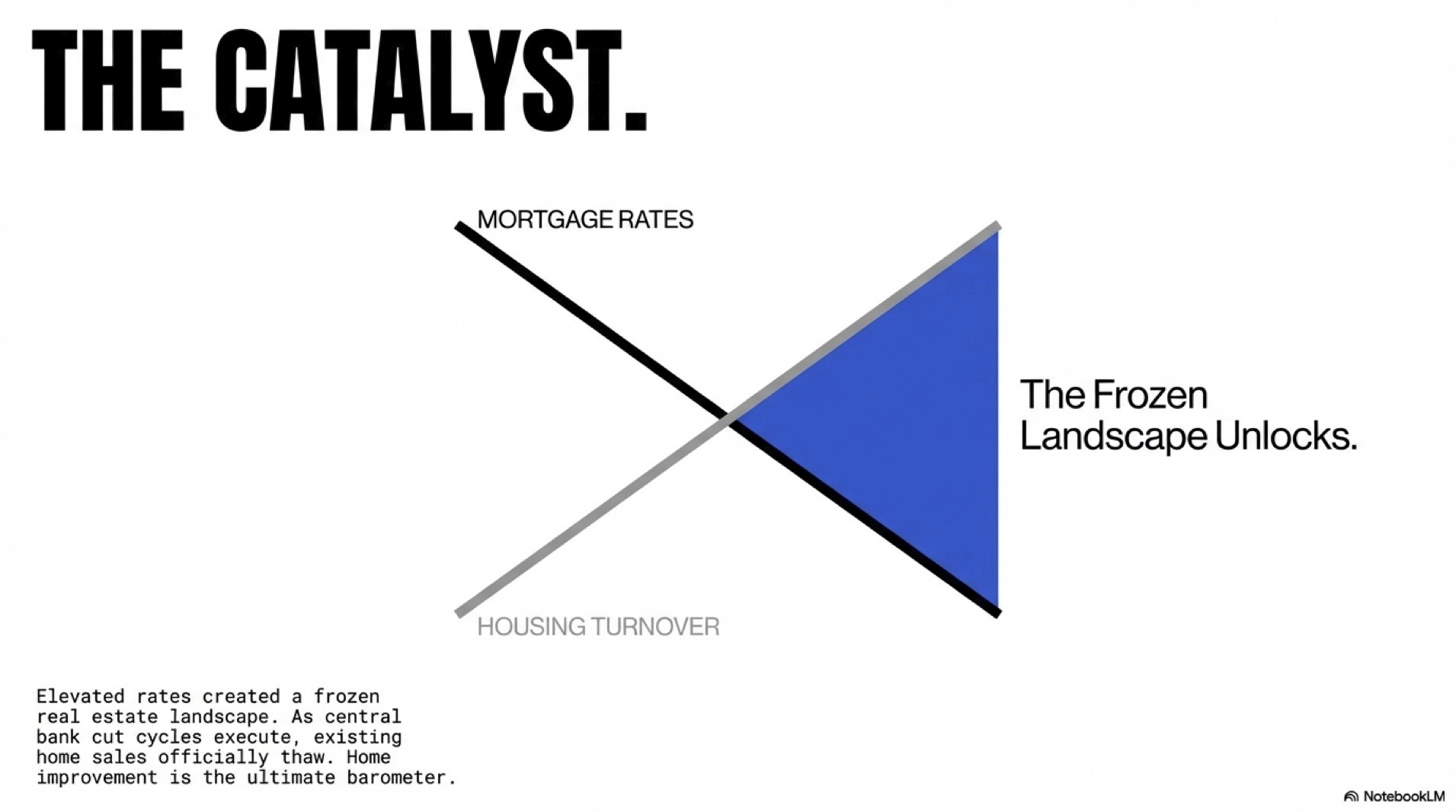
The American housing market serves as the ultimate barometer for macroeconomic health. For the past few years, elevated mortgage rates created a frozen real estate landscape. Homeowners refused to sell and give up their low interest rates, causing existing home sales to plummet. However, as central banks execute their interest rate cut cycles, the housing market is officially thawing.
This shifting environment makes home improvement retail trends the most critical space to watch. When people buy or sell homes, they spend massive amounts of capital on renovations. For investors evaluating housing market stocks in 2026, the entire sector boils down to a fundamental HD vs LOW stock comparison.
The Objective Baseline | Retail Performance Metrics
To properly gauge the health of the American middle class and the broader real estate sector, we must look at the hard financial data generated by these two retail giants. The numbers reveal exactly how consumers are spending their money.
Home Depot (HD)
Comparable Store Sales Growth: Stabilizing near 1.5%
Average Ticket Size: Approximately $90
Free Cash Flow Yield: Roughly 4.0%
Target Demographic Split: 50% Pro / 50% DIY
Lowe's (LOW)
Comparable Store Sales Growth: Flat to slightly negative
Average Ticket Size: Approximately $75
Free Cash Flow Yield: Roughly 4.5%
Target Demographic Split: 25% Pro / 75% DIY
While both companies operate massive warehouse style stores, their underlying financial health is tied to completely different consumer bases. Home Depot consistently generates a higher average ticket size, indicating that shoppers are buying expensive bulk materials rather than just weekend project supplies.
Analyzing the Business Models | The Pro versus The DIYer
The core divergence between these two companies lies in their specific target audiences. This difference dictates how sensitive each stock is to shifting mortgage rate macro indicators.
Home Depot and the Professional Contractor
Home Depot is structurally designed to serve the "Pro" customer. These are professional builders, electricians, plumbers, and general contractors. While Pros make up a smaller percentage of total foot traffic, they account for roughly half of the total revenue. This B2B model is incredibly resilient. Professional contractors buy materials in massive quantities for whole house remodels and new construction. These large scale projects are directly tied to existing home sales. To permanently solidify this moat in 2026, Home Depot's massive $18 billion acquisition of SRS Distribution has radically expanded its ability to deliver specialized materials directly to complex job sites. As mortgage rates drop and housing turnover increases, contractors secure more work, driving massive, high margin revenue directly into Home Depot.
Lowe's and the Everyday Consumer
Lowe's operates with a heavy focus on the Do It Yourself consumer. Their stores are generally brighter, with a heavier emphasis on appliances, seasonal garden centers, and home decor. This B2C focus makes Lowe's highly sensitive to immediate consumer discretionary spending. When inflation bites into everyday budgets, homeowners delay buying a new refrigerator or painting their living room. However, when interest rates drop and consumer confidence rebounds, Lowe's often sees a very rapid, immediate bump in foot traffic as homeowners tackle the small projects they delayed. Furthermore, under its "Total Home Strategy," Lowe's is aggressively revamping its loyalty programs to capture more of the Pro market, proving they are not ceding the B2B space entirely without a fight.
Strategic Insights for the Housing Recovery
Understanding the macroeconomic timeline is essential for determining which company offers the best margin expansion.
During the very early stages of a rate cut cycle, Lowe's often looks attractive. The immediate psychological relief of lower rates prompts everyday consumers to spend on minor upgrades. Their slightly higher Free Cash Flow yield also provides a solid dividend cushion for retail investors.
However, the true wealth in the housing market is generated during the sustained recovery phase. As existing home sales truly unlock and families begin moving across the country, the demand for major structural renovations skyrockets. Home Depot possesses a vastly superior supply chain and specialized distribution network for delivering heavy materials directly to complex job sites. Therefore, for long term investors seeking to capitalize on a multi year housing market recovery, Home Depot offers a structurally superior business model capable of capturing the most lucrative institutional spending.
Disclaimer: Financial metrics and market trends are based on industry consensus estimates for educational purposes. Real estate and retail equities carry inherent macroeconomic risks. Always consult a certified financial planner before making investment decisions.