The artificial intelligence revolution has a massive, often overlooked resource problem. While power generation dominates the headlines, the liquid cooling required to keep advanced semiconductors from melting is quietly becoming the most critical limitation for hyperscalers. Environmental, Social, and Governance mandates are actively shifting institutional capital toward solutions for this impending crisis. For investors tracking water infrastructure stocks in 2026, the market presents two distinct pathways to capture this value, represented perfectly by Xylem and American Water Works.
The Baseline Financial Data
Understanding how to allocate capital within the ESG institutional investment trends requires looking at the raw financial engines of these two sector leaders. The capital expenditure requirements and margin profiles tell a story of completely different business models.
Xylem (Ticker XYL)
Capital Expenditure: Approximately 250 million to 300 million dollars annually.
Operating Margin: Roughly 15 to 17 percent.
Dividend Growth Rate: Sustaining an 8 to 10 percent annual increase.
American Water Works (Ticker AWK)
Capital Expenditure: Exceeding 2.5 billion dollars annually.
Operating Margin: Consistently near 30 to 35 percent.
Dividend Growth Rate: Highly predictable at roughly 7 to 9 percent.
B2B Technology Growth versus Regulated Monopoly
The drastic difference in capital expenditure highlights how each company operates within the data center cooling investments landscape.
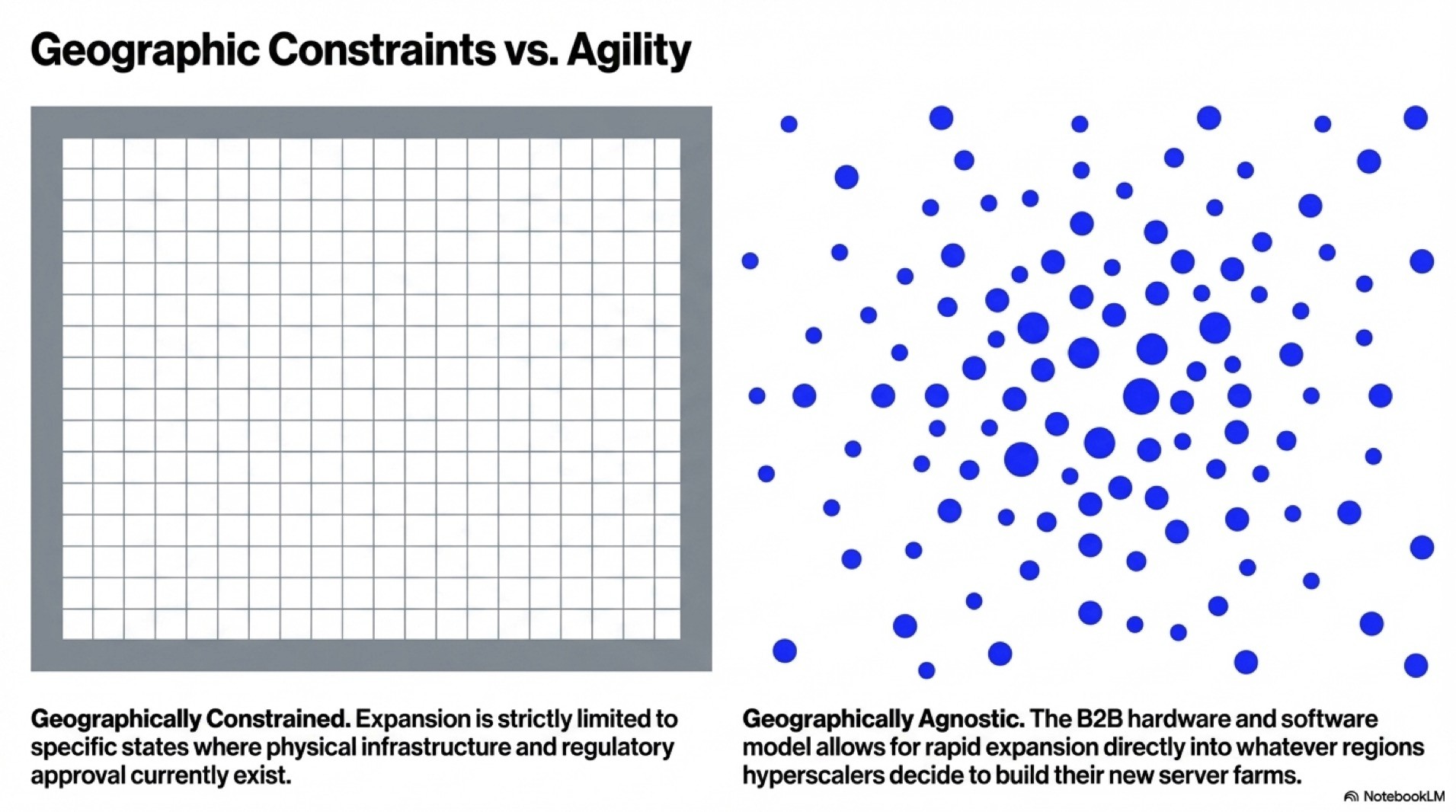
Xylem functions much like an industrial technology company. They do not own the water. Instead, they sell advanced treatment equipment, smart metering software, and closed loop cooling technologies. Bolstered heavily by the recent strategic acquisition of Evoqua Water Technologies, Xylem now dominates the market for outsourced mission critical water treatment and ultrapure water, both of which are absolutely vital for data center liquid cooling. Because they are selling B2B hardware and software solutions globally, the model is geographically agnostic and requires relatively light capital. This allows for rapid expansion directly into whatever regions hyperscalers decide to build their server farms.
American Water Works is a massive, regulated regional monopoly. They own the physical pipes, reservoirs, and treatment facilities across the United States. To maintain and expand this physical footprint, the capital expenditure is astronomical. However, in exchange for strict government oversight, they operate with a highly protected business moat. The revenue is effectively a bond proxy, providing investors with incredibly reliable, long term cash flows immune to typical macroeconomic shocks.
The Big Tech Water Footprint and Pricing Power
Major technology companies are currently consuming billions of gallons of freshwater annually to cool server farms. As municipalities begin to push back against this massive consumption, local regulations are tightening rapidly.
In an environment defined by strict regulatory oversight and water scarcity, pricing power becomes the ultimate metric for an investor. American Water Works must constantly negotiate with public utility commissions to raise rates on consumers and corporations. Furthermore, their growth is geographically constrained to the specific states where they operate. While the revenue is incredibly stable, the ability to aggressively increase prices is legally capped by the government.
Xylem holds a distinct advantage in pricing power and geographic flexibility. When a technology giant faces a choice between buying highly expensive, specialized ultrapure liquid cooling equipment from Xylem or having a multi billion dollar data center shut down by local water regulators, the choice is obvious. Xylem can command premium pricing for technological solutions because the equipment directly solves the existential threat of water scarcity for these tech monopolies.
For investors seeking steady, bond like stability, AWK remains a foundational portfolio asset. However, for those looking to directly monetize the urgent technological bottlenecks of the AI expansion, XYL provides a far more dynamic growth trajectory.
Disclaimer: All financial estimates are based on public industry data for educational purposes. Investing in utility and infrastructure equities carries market and regulatory risks. Always consult a certified financial advisor before making capital allocation decisions.