AWS vs. Azure | Evaluating Enterprise AI Monetization and Cloud Market Share in 2026
Microsoft Azure is rapidly converting massive AI investments into direct operating income through its exclusive OpenAI integration, while AWS maintains overall market dominance by offering a flexible, model-agnostic enterprise ecosystem.
6
min read
6
min read
The cloud computing landscape has fundamentally shifted. General compute workloads are no longer the primary growth driver. In 2026, enterprise AI monetization dictates market valuations. The MSFT vs AMZN stock comparison now hinges entirely on which provider can most efficiently turn massive capital expenditures into recurring software revenue.
Hard Data: The 2026 Cloud Baseline
An examination of recent corporate filings and market run-rates reveals a clear picture of cloud market share in 2026. While Amazon Web Services retains the absolute lead in total revenue, Microsoft Azure is leveraging artificial intelligence to close the gap rapidly.
Financial Metric (2026 Estimates)
Amazon Web Services (AWS)
Microsoft Azure (Cloud Segment)
Annual Revenue Run-Rate
Approx. $105 Billion
Approx. $85 Billion (Estimated/Implied)
Operating Margin
Roughly 31%
Roughly 44%
Primary AI Revenue Driver
Amazon Bedrock (Model Marketplace)
OpenAI API & Copilot Ecosystem
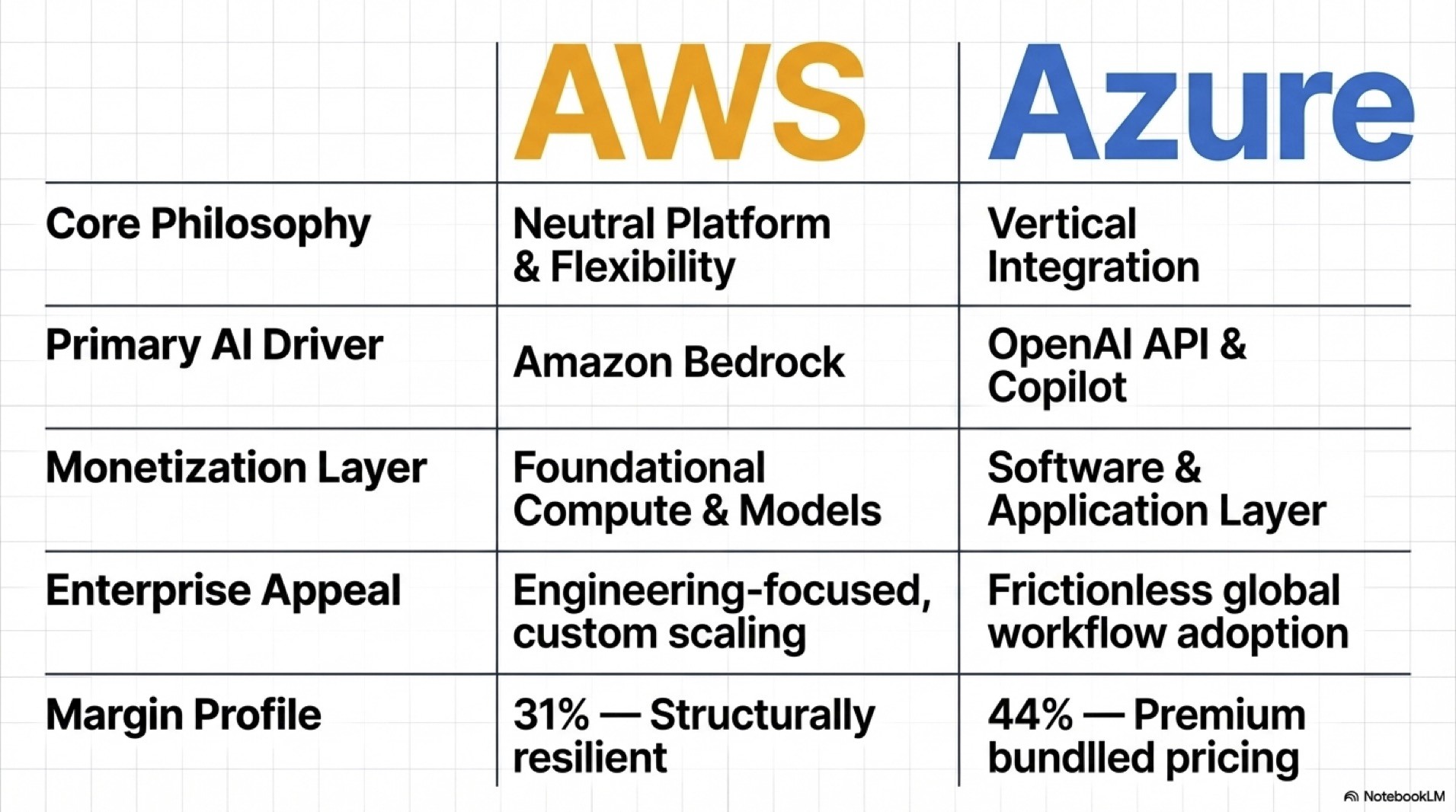
The data highlights a distinct margin advantage for Microsoft. This difference is directly tied to how each company packages and sells its technological infrastructure to large corporate clients.
Ecosystem Strategies: Integration vs. Flexibility
The battle for AWS vs Azure AI revenue is defined by two completely opposing business philosophies. These strategic differences heavily influence corporate purchasing decisions.
The Azure Approach: Vertical Integration
Microsoft Azure utilizes a tightly controlled, vertically integrated strategy. By deeply embedding OpenAI models across the entire enterprise software suite, Azure creates a seamless deployment pipeline. If a global corporation wants the latest generative capabilities integrated directly into daily employee workflows, Azure presents the path of least resistance. This closed-ecosystem approach commands premium pricing, driving incredibly high operating margins and rapid, frictionless AI adoption at the enterprise level.
The AWS Approach: The Neutral Platform
Amazon Web Services champions the platform approach. Through Amazon Bedrock, AWS acts as a neutral, highly secure marketplace. While strictly agnostic, AWS heavily leans on its multi-billion-dollar strategic alliance with Anthropic's Claude family as its de facto flagship offering. Enterprises avoid vendor lock-in by maintaining the freedom to choose between Anthropic, Meta, Mistral, or Amazon's own proprietary models depending on the specific workload. This flexibility appeals heavily to engineering-focused organizations that require specialized models for different tasks, ensuring AWS protects its existing market share against aggressive competition.
The Bottom Line on AI Monetization
The ultimate test for these technology giants is the translation of massive data center spending into actual operating income.
Current financial indicators suggest that Microsoft is executing this translation at a faster pace. The direct integration of artificial intelligence into mandatory enterprise software subscriptions allows Azure to monetize at the high-margin software layer, not just the foundational compute layer.
However, AWS remains a highly defensive powerhouse. The massive existing customer base and cost-effective infrastructure guarantee steady, long-term enterprise AI monetization. As corporate clients move past experimental phases and begin scaling highly customized, multi-model applications, the AWS agnostic platform provides a structurally sound and financially resilient architecture.
Disclaimer: Financial projections and market share data are based on industry consensus estimates as of early 2026. This article is for informational and educational purposes only and does not constitute personalized investment advice. Always conduct independent research before making financial decisions.