Navigating Wealth Management | BlackRock vs Blackstone in a Shifting Yield Environment
While BlackRock secures steady revenue through unmatched scale and passive ETF volume, Blackstone commands premium profitability by capturing institutional and retail demand for high-yield alternative assets and private credit.
9
min read
9
min read
The asset management sector is undergoing a massive transformation in early 2026. As central banks navigate the delicate balance of adjusting interest rates, institutional capital is rapidly reallocating to protect yields. For investors evaluating alternative asset management stocks, the comparison between BlackRock (BLK) and Blackstone (BX) highlights two entirely different philosophies for capturing global wealth.
The Objective Financial Baseline
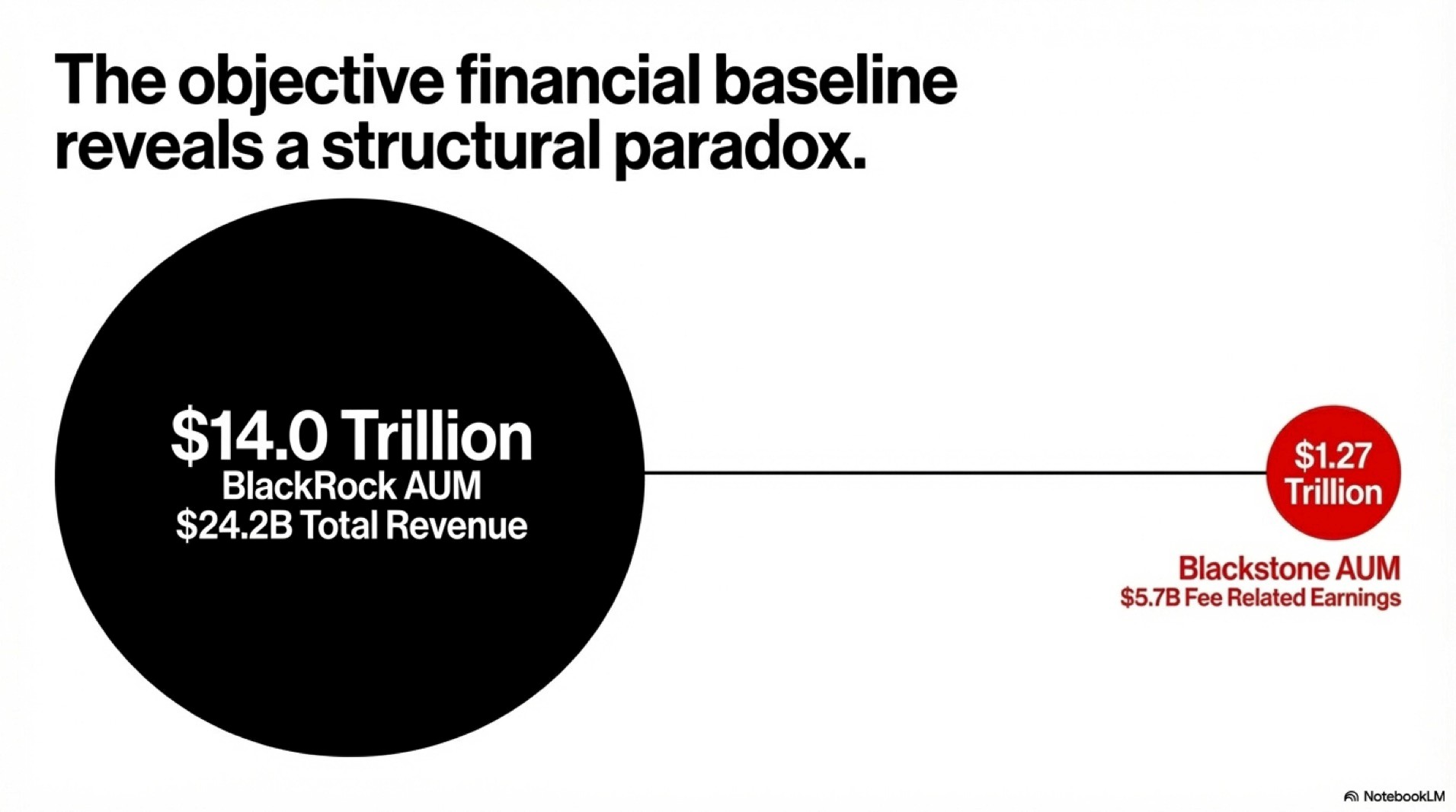
To understand the institutional investment trends of 2026, it is necessary to look at the hard data from the most recent corporate filings. Both firms manage staggering amounts of capital, but the revenue engines are built on completely different foundations.
Metric (Early 2026 Corporate Filings)
BlackRock (BLK)
Blackstone (BX)
Total Assets Under Management
$14.0 Trillion
$1.27 Trillion
Core Revenue Engine
Public Market Volume & ETFs
Alternative Assets & Private Credit
Recent Earnings Highlights
$24.2 Billion Total Revenue
$5.7 Billion Fee Related Earnings
Dividend Profile
$5.73 per quarter (10% increase)
$1.49 per quarter (Variable)
BlackRock dwarfs every competitor in pure scale. Hitting the 14 trillion dollar milestone required absorbing massive inflows into public market equity and fixed income funds. Blackstone operates with less than one tenth of that AUM but generates incredibly lucrative Fee Related Earnings because managing private, illiquid assets commands a much higher premium.
Passive Volume vs Alternative Alpha
The core difference in the business models dictates how cash is generated for shareholders.
BlackRock is the undisputed king of passive investing. Through the iShares ETF platform, the company captures a tiny fraction of a percentage point on trillions of dollars. This model relies heavily on broader market beta. When the S&P 500 rises, BlackRock sees AUM and fee revenue increase automatically. To diversify, BlackRock has recently made aggressive moves into private markets, highlighted by the acquisition of HPS Investment Partners, bringing alternative AUM to over 400 billion dollars.
Blackstone operates primarily in the private sector. The model is built on active management, specifically in real estate, private equity, and the rapidly expanding private credit market of 2026. Institutional investors lock up capital with Blackstone for years. In return, Blackstone charges higher management fees and takes a cut of the performance profits. Furthermore, Blackstone is increasingly tapping into the multi-trillion-dollar retail wealth market through products like BCRED and BREIT to sustain growth. This creates a highly sticky asset base known as perpetual capital, which exceeded 520 billion dollars in recent filings.
Navigating the Rate Cycle
The current macroeconomic environment impacts these two giants differently.
During a period of declining or stagnant interest rates, traditional fixed income portfolios struggle to generate sufficient returns for massive pension funds and sovereign wealth entities. Consequently, institutional capital aggressively hunts for higher yields. This environment perfectly suits Blackstone. The private credit division becomes highly attractive as it offers floating rate loans and structured credit solutions that significantly outpace public bonds.
However, Blackstone is sensitive to transaction volumes. If interest rates remain highly unpredictable, real estate valuations freeze, making it difficult for Blackstone to exit investments and realize performance fees.
BlackRock offers more earnings predictability. Because fees are largely generated from passive public market exposure, as long as global stock markets do not experience a catastrophic crash, the baseline revenue remains exceptionally stable. The recent expansion into technology services also provides a growing, recurring revenue stream that is entirely divorced from market volatility.
Strategic Portfolio Allocation
For an investor looking to allocate capital within the wealth management sector, the choice depends on macro forecasting.
If the global stock market continues its broad upward trajectory, BlackRock provides the safest, most predictable exposure. The business model captures the natural expansion of global wealth, supported by a highly reliable and growing dividend.
Conversely, if a sideways public market is anticipated where alpha must be generated through complex, private transactions and high-yield credit, Blackstone is the superior vehicle. It provides retail investors access to the exact same private credit and real estate deals that the world largest sovereign wealth funds are currently buying.
Disclaimer: All financial data and corporate metrics are based on public SEC filings and earnings reports as of early 2026. This article is for informational purposes only and does not constitute personalized financial advice. Conduct thorough independent research before making investment decisions.