The Solid-State Tipping Point | 2026 Commercialization Timelines and EV Battery Supply Chain Disruption
As of Q2 2026, the delivery of A-sample and B-sample solid-state battery testing units to global automotive OEMs marks a definitive commercialization milestone, redirecting institutional capital toward specialized material producers driving a market expanding at a 33% CAGR.
6
min read
6
min read
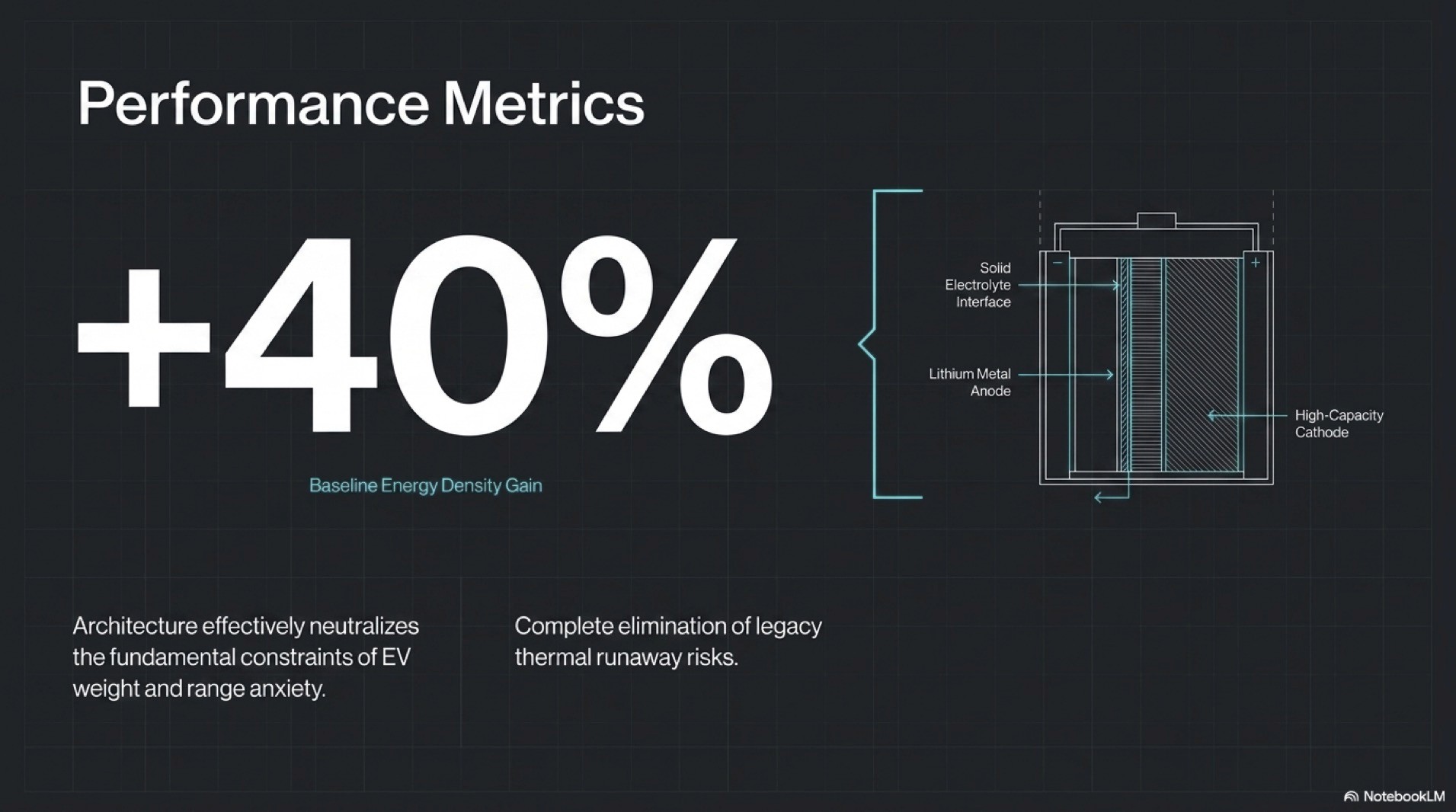
The first half of 2026 represents a critical inflection point in modern automotive mobility. Global battery cell manufacturers have officially commenced shipments of A-sample and B-sample solid-state units to primary automotive clients for rigorous vehicle integration testing. By achieving a minimum 40% increase in energy density over traditional lithium-ion frameworks, this architecture effectively neutralizes the fundamental constraints of EV weight and range anxiety. This technological leap forward initiates a structural decline in the legacy liquid electrolyte and polyolefin separator markets. Consequently, specialty chemical firms possessing advanced synthesis capabilities for core materials, particularly lithium sulfide, are undergoing rapid valuation reratings.
Capital Allocation and Production Roadmaps
Institutional capital is tracking confirmed capital expenditure and joint venture announcements aligned precisely with the 2027 to 2028 mass commercialization targets established by leading developers such as Toyota and Samsung SDI. Market data confirms that the upstream supply chain is aggressively preparing for volume production, supported by strategic partnerships like the alliance between Samsung SDI and Solid Power.
Market Indicator
2026 Supply Chain Reality
Material Growth Forecast
Solid electrolyte sector projected to sustain a Compound Annual Growth Rate (CAGR) of approximately 33.2% through 2034.
Infrastructure Demands
Exponential year-over-year order growth for ultra-dry room environmental controls.
Performance Metrics
Elimination of thermal runaway risks alongside +40% baseline energy density gains.
The Material Paradigm Shift
The transition to next-generation battery materials mandates a complete deconstruction of the existing component ecosystem. Highly flammable liquid electrolytes are being phased out in favor of highly conductive sulfide solid electrolytes and oxide-based alternatives, championed by material partnerships such as Toyota and Idemitsu Kosan.
This disruption extends immediately to the negative electrode. The industry is rapidly moving beyond conventional graphite and silicon compounds. The pursuit of the ultimate energy-dense cell has ignited the lithium-metal anode market. Implementing anode-free or pure lithium-metal architectures, similar to designs pioneered by QuantumScape, requires unprecedented precision. This shift births an entirely new sub-sector dedicated to atomic-level deposition and advanced surface coating equipment.
Manufacturing Retrofits and Equipment Bottlenecks
The transition away from liquid components drastically alters factory floor operations. Traditional battery assembly lines are largely incompatible with solid-state form factors. The new manufacturing process requires extreme high-temperature and high-pressure isostatic pressing equipment to ensure perfect contact between the solid layers. Furthermore, managing sulfide-based materials necessitates highly specialized, ultra-dry room facilities with stringent dew point controls to prevent toxic hydrogen sulfide gas generation. This creates a massive, immediate demand for capital equipment retrofitting across all tier-one battery plants globally.
Macro Insight: Capturing Alpha Through Intellectual Property
The arrival of solid-state technology is an event of absolute creative destruction. As battery architecture standardizes around solid frameworks, traditional cell assemblers will likely experience weakened margin negotiating power against automotive OEMs. The true economic upside within this cycle belongs strictly to the upstream ecosystem. Precision material and chemical companies holding core intellectual property for solid electrolyte synthesis and lithium-metal handling are positioned to monopolize the excess market returns, establishing dominant pricing power over the next decade of mobility infrastructure.
Disclaimer: This content is for informational and reference purposes only. Always conduct independent research before making financial decisions.