The Alzheimer's Infrastructure Bottleneck | Diagnostics and Infusion Center Market 2026
The commercialization of advanced amyloid-targeting Alzheimer's therapies has created a severe logistical bottleneck, driving aggressive institutional investment into blood-based diagnostic testing and specialized ambulatory infusion infrastructure.
7
min read
7
min read
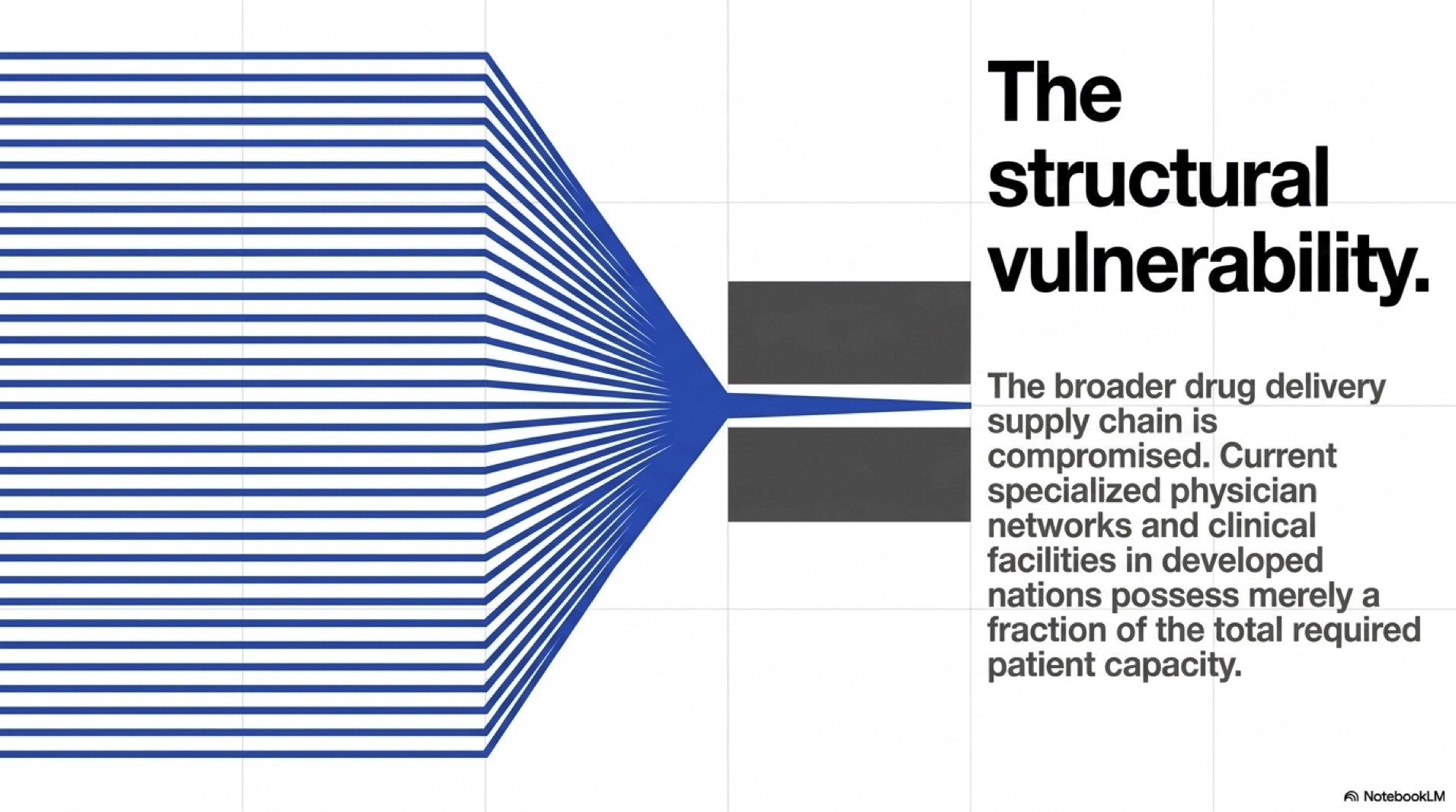
The commercial deployment of advanced amyloid-targeting Alzheimer's therapies, specifically monoclonal antibodies like lecanemab and donanemab, has triggered an unprecedented logistical challenge across the healthcare sector. Prescription volumes for early-stage neurodegenerative patients are expanding rapidly, exposing a severe vulnerability within the broader drug delivery supply chain. Current specialized physician networks and clinical facilities in developed nations possess merely a fraction of the total required patient capacity, creating a structural bottleneck.
The $15 Billion Infrastructure Deficit
This massive capacity gap is transforming the Alzheimer's disease diagnostics market and treatment administration landscape into a highly lucrative target for institutional capital. With millions of eligible patients entering the clinical funnel, healthcare Real Estate Investment Trusts (REITs) and private equity firms are executing aggressive roll-up strategies to acquire and develop the physical footprint necessary to process this surging demographic. Understanding this capital flow requires an analysis of three distinct segments forming the newly established Alzheimer's treatment value chain.
Value Chain Segment
Key Infrastructure Shift
Primary Catalyst
Upstream (Diagnostics)
Transitioning from PET/CSF to high-efficiency p-tau217 blood tests.
Expanded Medicare coverage and improved accuracy of In Vitro Diagnostics (IVD).
Midstream (Administration)
Shifting from hospital wards to independent Ambulatory Infusion Centers (AICs).
Resource-intensive IV delivery limiting traditional acute care bed turnover.
Downstream (Monitoring)
Upgrading standard imaging to AI-assisted 3T MRI hardware.
Strict FDA-mandated protocols for monitoring ARIA side effects.
Upstream: The Diagnostic Paradigm Shift
Historically, identifying eligible patients relied heavily on cost-prohibitive, invasive cerebrospinal fluid (CSF) assays and a severely constrained amyloid PET scan supply chain. Capital expenditure has now decisively pivoted toward low-cost, high-efficiency in vitro diagnostic (IVD) systems. Driven by dramatic clinical validation of specific blood-based biomarkers, notably p-tau217, alongside expanded reimbursement frameworks, systemic diagnostic demand has exploded. Market leaders such as C2N Diagnostics and Quest Diagnostics are commercializing these highly accurate assays, effectively bypassing historical imaging waitlists and unlocking the top of the patient funnel.
Midstream: The Rise of Ambulatory Hubs
Administering targeted monoclonal antibodies remains highly resource-intensive. The required intravenous delivery, followed immediately by mandatory clinical observation periods, consumes significant clinical time. Traditional inpatient hospital facilities lack the physical bed capacity and staff bandwidth to process routine, high-volume infusions effectively. Consequently, institutional capital is flowing directly into the expansion of independent ambulatory neurology infusion centers. Operators like Option Care Health exemplify this specialized outpatient facility model, representing the critical midstream bottleneck where patient throughput dictates total revenue generation.
Downstream: AI Integration in Post-Infusion Monitoring
Post-infusion clinical care demands rigorous, ongoing observation for adverse effects, specifically Amyloid-Related Imaging Abnormalities (ARIA). This non-negotiable regulatory requirement has sparked a notable spike in demand for high-resolution brain MRI equipment. Facilities are increasingly pairing new 3T MRI hardware with FDA-cleared, AI-assisted radiological reading software to process the sheer volume of periodic scans necessary to maintain patient safety while adhering strictly to medication protocols.
Sector Insights and Capital Allocation
Within the evolving Alzheimer's medical ecosystem, the most immediate and highly predictable profitability exists outside traditional pharmaceutical development. The true financial upside resides within the infrastructure assets supporting these breakthrough drugs. Hardware manufacturers supplying advanced diagnostic platforms and operators controlling specialized neurology infusion centers are capturing the immense physical traffic generated by these therapeutics. By securing the essential logistical foundation of this medical expansion, these specialized infrastructure entities are positioned to record exceptional Return on Invested Capital (ROIC) across the broader healthcare landscape.
Disclaimer: This content is for informational and reference purposes only. Always conduct independent research before making financial decisions.