Swallowing the Market | Oral GLP-1 Breakthroughs and the Peptide CDMO Supply Chain Bottleneck
The commercialization of next-generation oral GLP-1 weight loss therapies requires up to 20 times more active pharmaceutical ingredients than injectables, creating a massive structural bottleneck and driving unprecedented capital into the specialized peptide CDMO market.
7
min read
7
min read
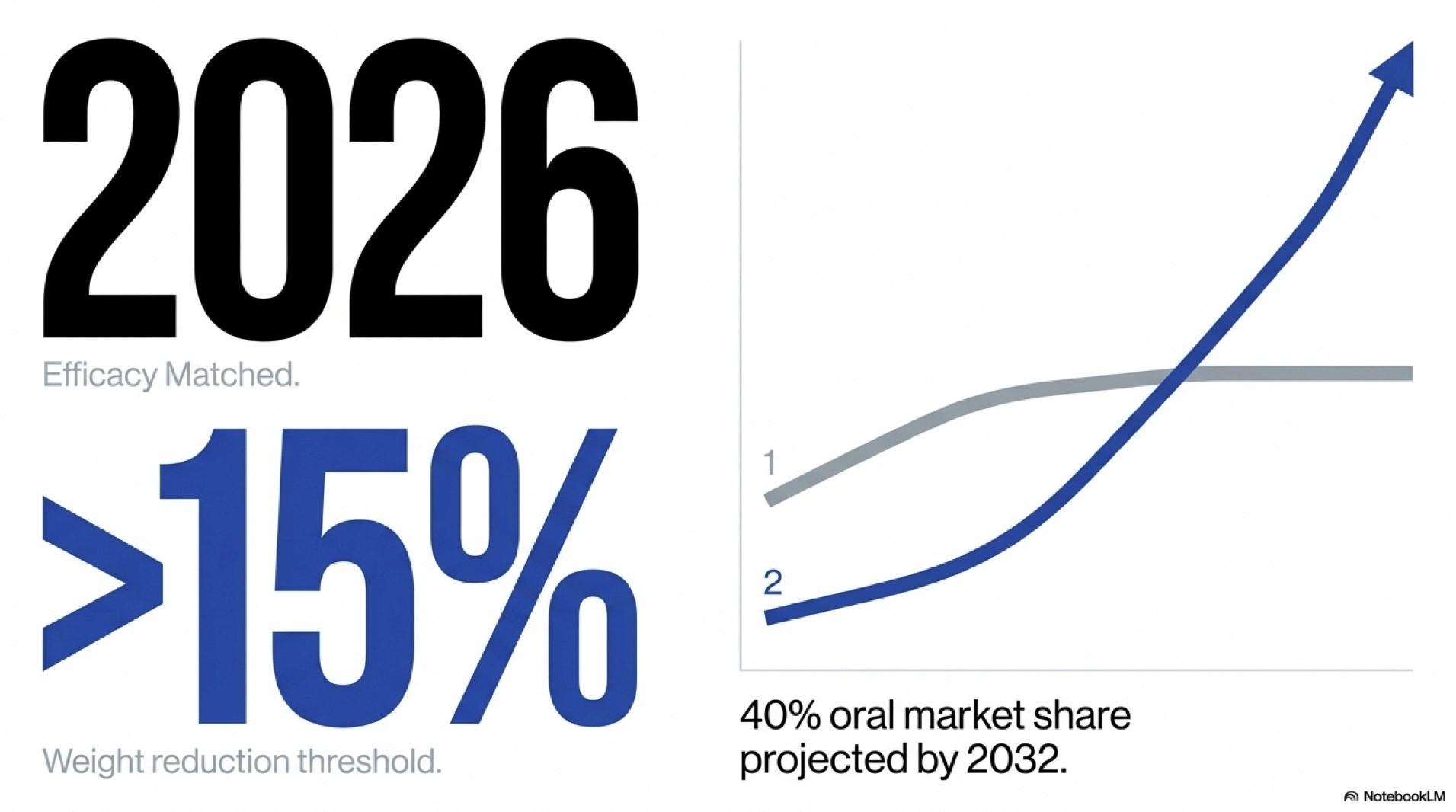
Late-stage clinical trial results released in early 2026 fundamentally alter the trajectory of the healthcare sector. Data confirms that once-daily oral GLP-1 receptor agonist formulations now match the 15% or greater weight reduction efficacy historically exclusive to injectable therapies. This breakthrough establishes oral treatments as definitive industry catalysts, projected to capture over 40% of the total obesity market by 2032.
Escaping the constraints of subcutaneous needles introduces a severe industrial challenge. Formulating a peptide for oral delivery requires co-formulation with absorption enhancers, such as SNAC (Salcaprozate sodium), to prevent premature degradation by gastric acids. This biochemical reality dictates that a single oral dose consumes 10 to 20 times more Active Pharmaceutical Ingredient (API) than its injectable counterpart. This exponential surge in API demand completely overwhelms existing global manufacturing infrastructure, exposing acute vulnerabilities within the obesity drug supply chain.
Industry Metrics and Capacity Constraints
The sheer volume of raw material required for oral formulations has pushed the global peptide CDMO market valuation toward an estimated $5.8 billion in 2026, correcting previous speculative overestimates. To meet escalating pharmaceutical demands, top-tier Contract Development and Manufacturing Organizations (CDMOs), such as Bachem and CordenPharma, are deploying capital at historic rates.
The CapEx-to-Free-Cash-Flow ratio for major global CDMOs now exceeds 80%.
API Consumption
Oral GLP-1 therapies require 10x to 20x more active peptide per dose versus subcutaneous injectables.
Upstream: Raw Material Scarcity and Pricing Power
The bottleneck originates at the very start of the chemical synthesis process. Large-scale Solid-Phase Peptide Synthesis (SPPS) relies heavily on immense quantities of high-purity amino acids, Fmoc protecting groups, and highly specialized chemical solvents like acetonitrile. The sudden pivot toward oral manufacturing triggers acute shortages of these fundamental inputs. Consequently, precision chemical suppliers holding the inventory and synthesis capabilities for these raw materials secure unprecedented pricing power over global pharmaceutical giants like Novo Nordisk and Eli Lilly.
Midstream: Pharmaceutical Manufacturing CapEx and Formulation M&A
The midstream segment is experiencing a massive influx of institutional funding. Constructing commercial-scale peptide reactors requires highly specialized engineering and massive pharmaceutical manufacturing CapEx. Beyond raw API production, the ability to formulate fragile peptides into stable, ingestible tablets remains highly prized. Companies possessing proprietary oral Drug Delivery System (DDS) platforms emerge as top-tier acquisition targets. Strategic M&A activity surges as drug developers attempt to internalize formulation capabilities and secure guaranteed production slots.
Downstream: Logistics Infrastructure and Retail Margins
The transition from injectables to oral medication drastically simplifies the downstream distribution network. Traditional injectable GLP-1 therapies mandate strict cold-chain logistics, requiring specialized refrigerated transport and storage from the factory floor to the patient. Oral formulations can be stored safely at ambient room temperatures. This eliminates reliance on expensive cold-chain networks and structurally improves the margin profile for retail pharmacies handling the physical distribution of the medication.
Macro Insight: Controlling the Manufacturing Bottleneck
The ultimate commercial victors of the oral obesity drug revolution will not necessarily be the pharmaceutical brands holding the primary drug patents. The true financial upside belongs to the entities controlling the physical manufacturing bottleneck. Global CDMOs possessing the capital necessary to construct massive commercial peptide reactors, alongside equipment vendors developing innovative Liquid-Phase Peptide Synthesis (LPPS) or continuous manufacturing solutions, form the most lucrative value capture matrix in the modern biotech landscape.
Disclaimer: This content is for informational and reference purposes only. Always conduct independent research before making financial decisions.