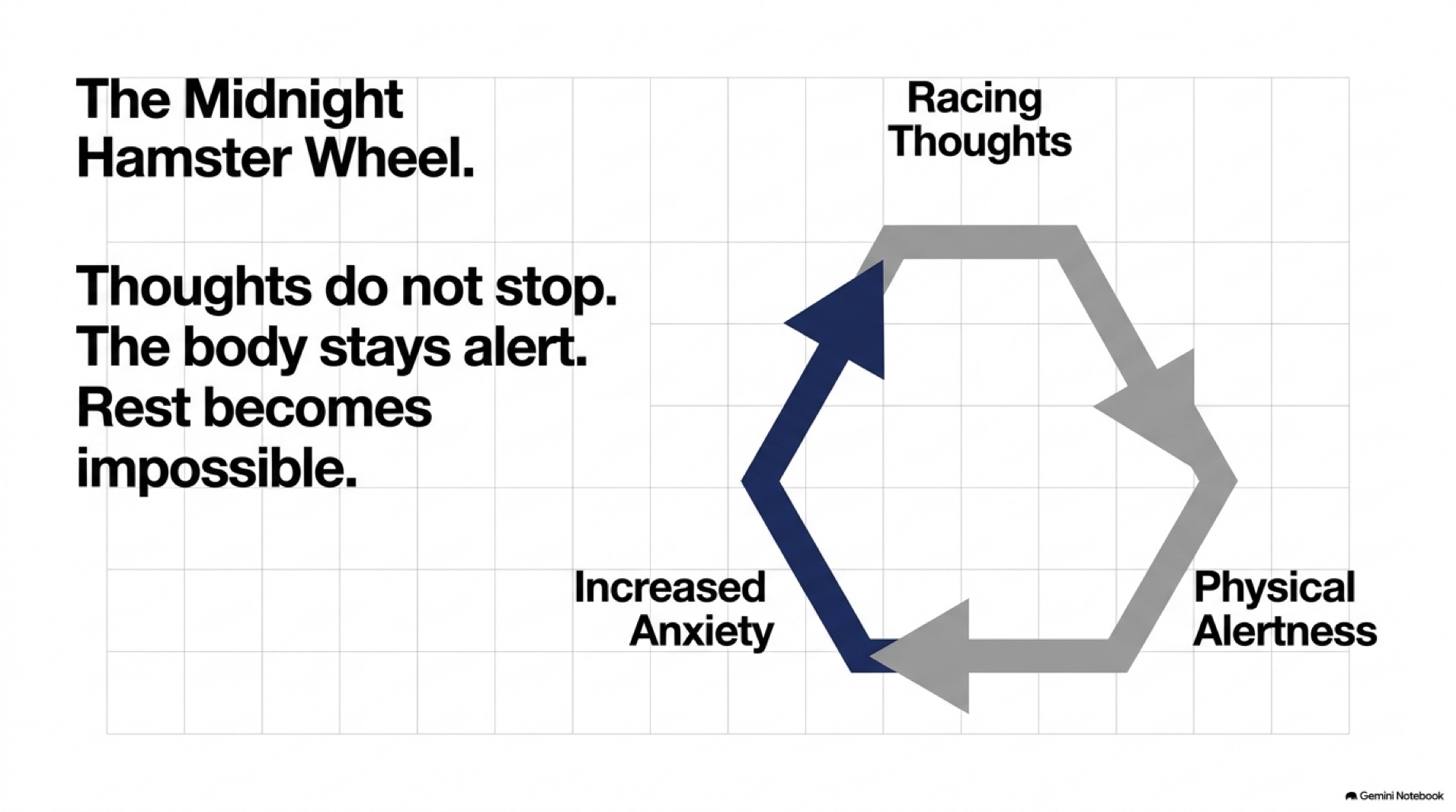
We have all been there: the lights are out, the house is quiet, and your body is exhausted, yet your mind refuses to settle. If you struggle with rest, it is important to know that you are not alone, and your experience is rooted in the complex, shifting biology of the mind. Improving sleep quality is not just about feeling refreshed; it is one of the most significant investments you can make in your long-term brain health.
Recent research is beginning to show that “poor sleep” isn’t a universal experience. Instead, it manifests in strikingly different ways as we age. Findings from researchers like Professor Ian M. McDonough at Binghamton University and experts like Dr. Luc Beaudoin are shedding light on why our minds remain active at night and how we can finally find the “off” switch.
The Young Brain: A Body That Refuses to Settle
For younger adults, particularly those of college age, poor sleep is often characterized by a state called “hyperarousal.” According to Professor McDonough’s research, this happens when the brain’s motor circuitry—the regions that control movement—remains overactive even when the body is at rest.
This activity extends to the “salience network,” the system responsible for deciding what deserves our attention. When this network stays “hot” at bedtime, ordinary sounds and sensations become impossible to tune out. This results in:
- Heightened Sensory Awareness: Every floorboard creak or hum of the fridge feels amplified.
- Physical Agitation: A feeling that the body is physically “keyed up” or unready to settle.
- Premature Aging: Crucially, research shows that after sleep loss, a young brain’s networks start to resemble an older brain. In essence, chronic poor sleep can make a 20-year-old brain look and function like one decades older.
The Older Brain: When Networks Lose Their Boundaries
As we reach age 65 and beyond, the mechanism of sleep disruption shifts significantly. It is no longer just about a motor system that won’t shut down; instead, Professor McDonough describes it as a “system-wide breakdown” of the brain’s sleep-regulation networks.
In the older brain, the machinery that should quiet the mind loses its grip. Activity shifts away from movement regions and into cognitive and memory networks. More importantly, networks that are supposed to stay separate begin to over-communicate. This loss of boundaries means the brain can no longer coordinate the “wind-down” process required for rest.
Sleep Disruption Patterns: Younger vs. Older Brains
| Feature | Younger Brain (College Age) | Older Brain (65+) |
| Primary Brain Network Involved | Motor Circuitry & Salience Network | Cognitive & Memory Networks |
| Physical/Mental State | Hyperarousal; physically “wired” | Cognitive over-communication; loss of network separation |
| Subjective Experience | Feeling physically “keyed up”; alert to every sound | Fragmented thoughts; “busy” mind; memory fog |
| Root Cause (Hypothesis) | Inability to calm the body/motor systems | Systemic breakdown in coordinated sleep-regulation |
A Vital Warning: Sleep, Gender, and the Alzheimer’s Connection
The research highlights a specific, sensitive pattern in older women. In this group, poor sleep is strongly associated with unusual “cross-talk” between the “default mode network” (responsible for inward-turned thought and memory) and the “frontoparietal network” (which supports focus and attention).
Under normal conditions, these two networks keep their distance. However, in the aging brain, they begin to over-communicate. This wiring pattern is significant because it mirrors changes seen in the preclinical stages of Alzheimer’s disease—the silent years before symptoms like memory loss become obvious. Because sleep acts as the brain’s “cleaning cycle” to flush out metabolic waste, these disruptions may be a factor in early cognitive decline.
(참고 자료: 미국심리학회(APA))
Why We Ruminate: The ‘Pinball Machine’ of the Mind
While these structural changes offer a long-term view of brain health, the immediate hurdle for most of us is the nightly “volume” of our own thoughts. Psychologists refer to this as “mental perturbance” or rumination. It is a state where the frontal cortex remains active, fueled by stress, anxiety, or caffeine.
In this state, your mind behaves like a pinball machine, with thoughts ricocheting from one worry to the next. This creates a high level of “perturbance” that actively hinders the brain’s natural control system for sleep onset. You aren’t just thinking; you are in an agitated state that prevents the transition into the dream-like, disconnected imagery that precedes unconsciousness.
The Solution: Mastering the ‘Cognitive Shuffle’
Dr. Luc Beaudoin has developed a technique called the “Cognitive Shuffle” (or somnolent information processing) to bypass this mental traffic jam. The logic is profound: as we naturally fall asleep, our thoughts become scrambled and we begin to see unrelated imagery. The Cognitive Shuffle mimics this “picture show” of unrelated images, tricking the brain into realizing it is safe to drift off.
It hits a “sweet spot” by giving the brain a task that is engaging enough to block out worries about your mortgage or tomorrow’s meeting, but simple enough that it doesn’t require “executive function” or heavy effort.
How to Perform the ‘Piano’ Exercise:
- Pick a Starting Word: Choose a neutral word with no repeating letters, such as “PIANO.”
- Focus on the First Letter: Start with ‘P’. Imagine an object starting with P (e.g., “Peach”).
- The 5-6 Second Rule: Visualize that peach in detail—its texture, its color—for fully 5 to 6 seconds. This specific duration is key to sedating your synapses.
- Generate Associations: Think of the next ‘P’ word, like “Pluto.” Visualize the planet for 5-6 seconds. Then “Pupil” for 5-6 seconds.
- Move to the Next Letter: Once you run out of ‘P’ words, move to ‘I’. Imagine “Ice,” “Igloo,” or “Ivy,” remembering to hold each image for that 5-6 second window.
- Repeat: Continue through the word. Most people find they have “shuffled” off to sleep long before they reach the letter ‘O’.
Strategic Advice for Better Rest
Because the causes of sleep disruption differ by age, the kindest way to treat your brain is to tailor your approach:
- For the Young: Focus on techniques to quiet the body and “offload” the salience network. Journaling before bed can help move racing thoughts out of the motor circuitry and onto the page, allowing the body to finally settle.
- For the Older Adult: Because these changes are often systemic and linked to how networks communicate, the most supportive thing you can do is partner with a healthcare professional. Discussing sleep patterns early can help you look at the bigger picture of brain connectivity and long-term health.
Regardless of age, remember that “sleep hygiene” is the foundation. No mental exercise can fully override the biological surge of a late-night espresso or the blue light of a smartphone.
Reclaiming Your Nightly Reset
Understanding your brain’s specific age-related patterns is the first step toward reclaiming your rest. Whether your brain is physically “keyed up” or its internal networks are losing their boundaries, you have the power to intervene.
Sleep is the essential period when your brain performs its most vital maintenance, clearing out proteins and optimizing brain connectivity and sleep patterns for the day ahead. By using tools like the Cognitive Shuffle and respecting your biological need for a wind-down period, you can support your brain’s nightly reset and wake up with the clarity you deserve.
(참고 자료: National Institutes of Health (NIH))