“I really shouldn’t have said that earlier.” The Thought Circuit That Activates at Bedtime
Your body feels incredibly heavy, so why does your brain start spinning the moment your head hits the pillow? Does it sound familiar to have all sorts of regrets and anxieties you forgot about during your busy day suddenly creep up in the dark?
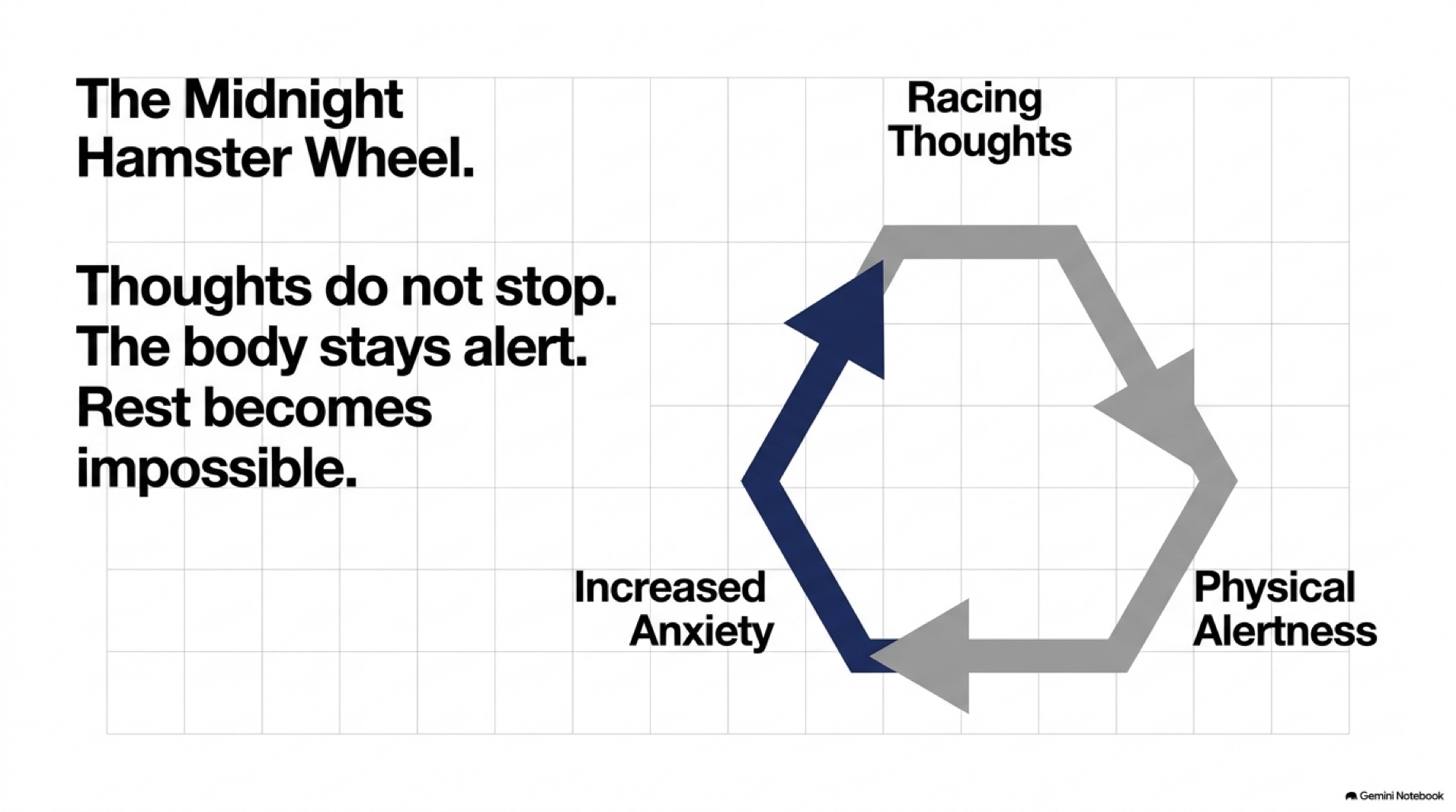
There are nights when thoughts like, “What if tomorrow’s big meeting goes wrong?” or “Why did that person look at me like that earlier?” just keep cycling. You lie down exhausted, yet your anxious mind churns as if someone flipped a pre-sleep racing thoughts switch in your head.
This phenomenon of nighttime rumination does not just happen to particularly sensitive people. It is simply one of the very natural habits our brains develop in response to changes in our environment.
Why Does the Brain Overheat So Much at Night?
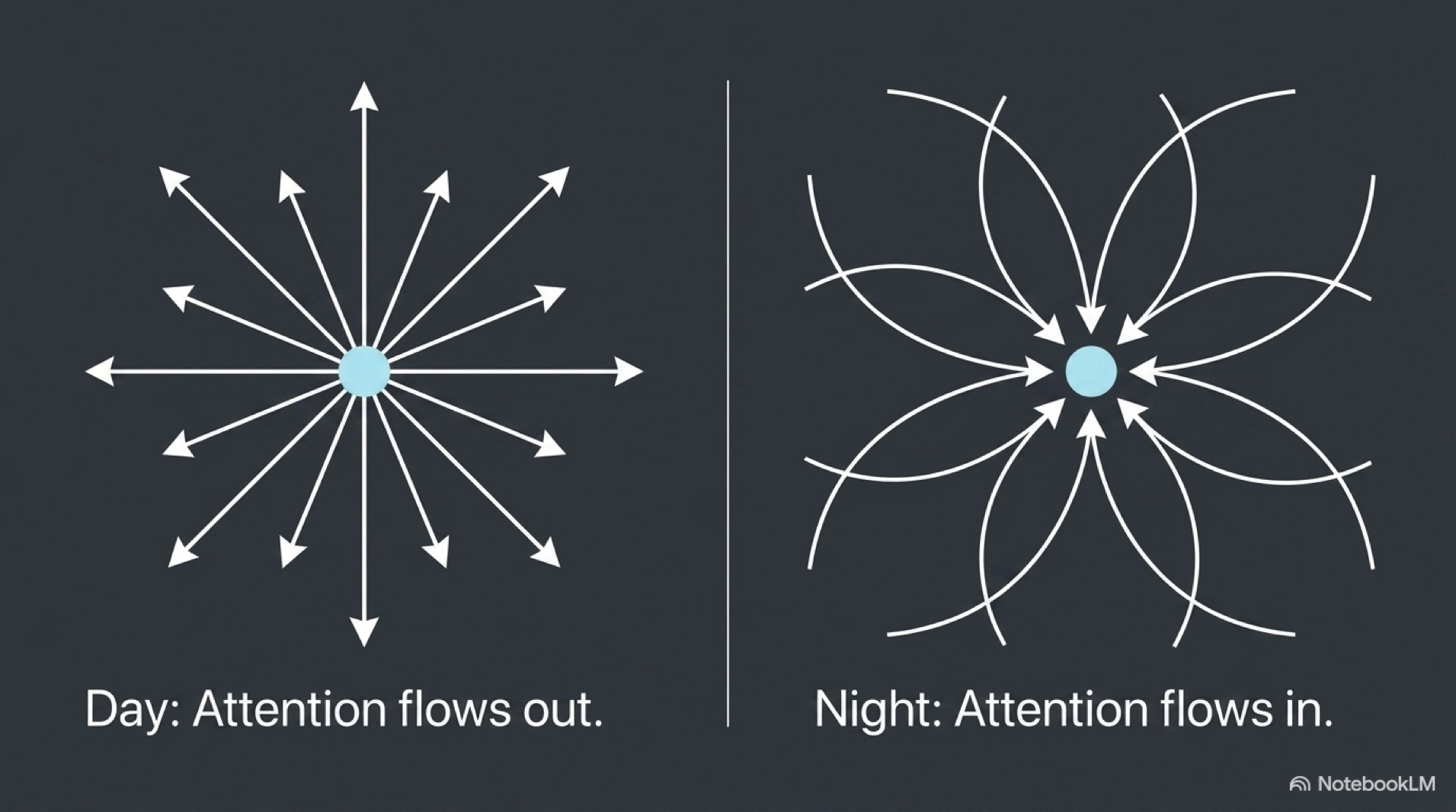
During the day, we are exposed to countless external stimuli. A mountain of work, a constantly buzzing smartphone, and the chaotic noise of the streets all direct our attention outward.
The situation changes when night falls and we get under the covers and close our eyes. In a quiet room where most external stimuli are blocked out, the brain’s attention naturally turns inward.
At this point, the brain tends to perceive unresolved issues or minor mistakes as a sort of threat. A defense mechanism kicks in where the brain puts itself on high alert and maintains a state of tension to prepare for and solve problems that might happen tomorrow.
The American Psychological Association (APA) calls this phenomenon ‘rumination’ and describes it as a psychological state of repeatedly dwelling on negative past events or emotions.
(Reference: American Psychological Association (APA))
In other words, these racing nighttime thoughts are not a sign that your brain is trying to torture you. They are actually evidence that your mind is working overtime to keep you safe from an uncertain future.
Turning Off the Racing Thoughts Switch | 3 Psychological Rules
So how can we quiet this unpleasant mental alarm? Many people try to force their thoughts away by telling themselves to stop thinking and just go to sleep.
Psychology refers to this as the ‘White Bear Effect’. Just as trying not to think of a white bear only fills your head with white bears, the more you suppress your thoughts, the more stubbornly they cling to you.
Rather than blindly pressuring your brain, it can be helpful to take a gentler approach that creates distance and allows thoughts to flow naturally.
Rule 1 | Labeling Your Thoughts (Cognitive Defusion)
A psychological therapy field called Acceptance and Commitment Therapy (ACT) utilizes a technique known as ‘Cognitive Defusion’. To put it very simply, this is the practice of separating yourself from the thoughts you are having.
People often think things like “I am doomed tomorrow” and quickly believe the anxiety popping into their heads is actual reality. In these moments, attaching a light label to the thought can be quite helpful.
You might want to try rephrasing the sentence in your mind to say, “I am having the thought that I might be doomed tomorrow.”
This small linguistic shift can help create some breathing room in your brain. It gently allows the mind to realize that thoughts are just like the weather passing through your head, which helps you take a step back from the emotional whirlpool.
Rule 2 | Scheduling ‘Worry Time’ During the Day
The ‘Worry Time’ technique, proven effective in numerous psychological studies, is also very useful. This method involves setting aside about 15 minutes during the day purely as a designated time just to worry.
If a worry suddenly pops up at night, you send a clear signal to your brain by saying, “This is an issue to think about tomorrow at 3 PM during worry time,” effectively postponing the processing.
| Category | Typical Worry Pattern | Applying Worry Time |
| Timing | Occurs randomly throughout day and night | A designated 15 minutes during the day (e.g., 3 PM) |
| Brain’s Response | Maintains constant tension and hyperarousal | Relaxes by classifying it as a task for later |
| Sleep Quality | Disrupts deep sleep and accumulates fatigue | Reduces pre-sleep racing thoughts and provides a sense of calm |
Setting aside time to worry like this can lead to a significant drop in unconscious anxiety. The brain tends to lower its guard and feel reassured, realizing that the problem is not being ignored but will be safely handled tomorrow.
Rule 3 | Stepping Out of Your Head and Shifting to Your Senses
To flip the switch off on overheated cognitive activity, it is effective to use grounding techniques that shift your attention to the opposite of thinking, which is your physical senses.
Harvard Medical School emphasizes the importance of inducing the ‘Relaxation Response’ to activate the parasympathetic nervous system and calm the stress response.
(Reference: Harvard Medical School)
Here are a few ways you might want to try shifting your senses right now in a dark room.
- Feel the temperature: Quietly focus on the cozy warmth of the blanket against your toes or the cool air brushing the tip of your nose in the room.
- Focus on touch: Fully experience the heavy sensation of the back of your head resting on the pillow and the firm feeling of the mattress supporting your back and waist.
- Observe the rhythm of your breath: Pay attention to the subtle, regular rhythm of your chest and belly rising and falling as you breathe in and out.
Stepping out of the world of thoughts and focusing on what your body is feeling in this exact moment can help you experience that tight tension in your brain slowly melting away.
It Is Okay Not to Force Yourself to Sleep
The pressure of thinking you need to fall asleep fast to avoid being tired tomorrow often serves as excellent fuel to wake the brain up even more. It can be quite helpful to quietly let go of the obsession that you must perfectly control your thoughts and fall asleep immediately.
Try not to be too disappointed if those pre-sleep racing thoughts do not completely vanish tonight. Creating distance from your thoughts with cognitive defusion, postponing anxiety with worry time, and fully focusing on your senses are all part of a gentle training process to teach your brain how to rest.
Instead of trying to forcibly stop your thoughts, consider practicing letting them pass by like flowing water.
As these small attempts build up little by little each night, the brain that was tangled in nighttime rumination will slowly feel secure and learn how to unwind. We hope that tonight you can slightly loosen those tight mental strings and allow your brain to welcome a comfortable and deep rest.